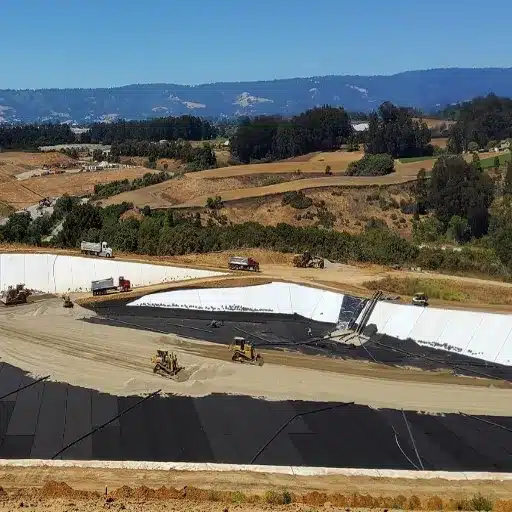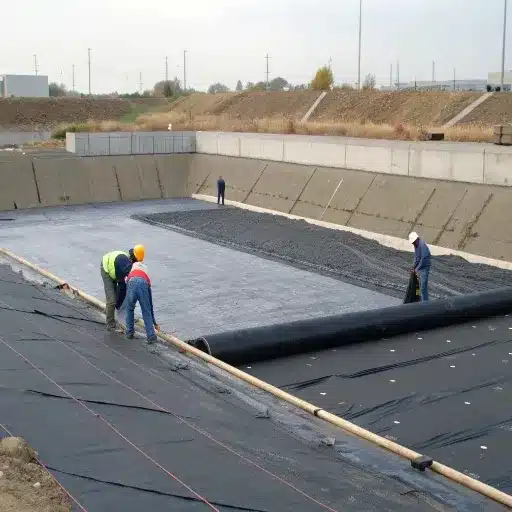
For crawler cranes, dump trucks, and drilling rigs, the right temporary roadway mats for heavy equipment are composite or UHMWPE panels for extreme loads, 20–25 mm HDPE for rubber-tired traffic on firm ground, and 150–200 mm hardwood crane mats for steel-tracked machinery. Always design the road for the heaviest piece of equipment expected on site.
A wind-farm contractor in Northern Europe learned this the hard way. His crew needed to move a 90-ton crawler crane across a peat bog to install turbines. They started with 15 mm HDPE mats to keep costs down. After the third move, the mats rutted and shifted under the crane’s tracks. The team switched to 25 mm composite mats laid over a woven geotextile separation layer, connected with 4-way joints. The crane completed 30 moves without a single mat failure.
This guide explains how to match temporary roadway mats to heavy equipment loads, track types, and ground conditions. You will learn how to size roads for crawler cranes, when to choose HDPE vs composite vs timber, and how to avoid the two mistakes that cause most heavy-equipment matting failures.
Key Takeaways
- Match the mat to the equipment: rubber-tired trucks use HDPE; rubber-tracked crawlers need 20–25 mm HDPE or composite; steel-tracked machines need timber or specialized composite.
- Reduce manufacturer load ratings by 30–50% on soft clay, peat, or saturated soils.
- Design heavy-equipment roads for the largest machine: 3 m minimum single-lane width, 6 m two-way, 12–15 m turning radius, and ≤10% grade.
- Use geotextile underlayment on weak subgrades to prevent soil pumping and maintain bearing capacity.
- Full crawler track coverage plus a 0.6 m perimeter beyond the track footprint is the safest setup.
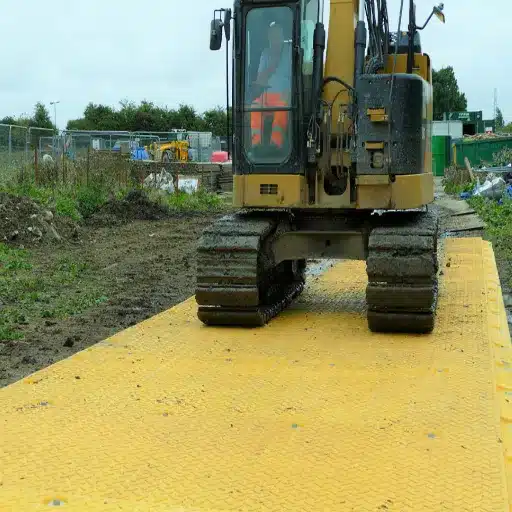
Composite temporary roadway mats distribute crawler crane loads over soft or unstable ground.
What Are Temporary Roadway Mats for Heavy Equipment?
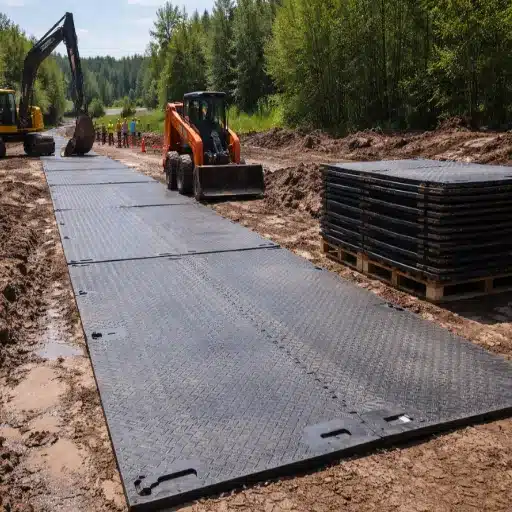
Temporary roadway mats for heavy equipment are engineered ground-protection panels that create stable, reusable access routes for machines that exceed standard vehicle weights. They distribute concentrated loads over a larger area, protecting the subgrade from rutting, compaction damage, and soil failure.
These mats are also called crawler crane mats, heavy equipment matting, temporary crane mats, steel track mats, and crane access road mats. They differ from light-duty ground protection mats because they must handle repeated passes by dump trucks, cranes, drilling rigs, and tracked excavators.
The basic engineering principle is simple: lower ground pressure by spreading weight over a wider contact area. A 40-ton dump truck tire may create 80–100 PSI contact pressure. A well-designed mat system can reduce that to roughly 15–25 PSI at the subgrade surface.
For a broader overview of materials and selection, see our complete guide to temporary roadway mats. This article focuses on crawler cranes, dump trucks, and rigs that exceed standard mat ratings.
If your project involves a complete road layout rather than just equipment matching, our temporary roadway design guide covers width, turning radius, drainage, and passing bays in detail.
Equipment Types and Load Requirements
Crawler Cranes
Crawler cranes are the most demanding users of temporary roadway mats. They combine high total weight with concentrated track loads, and they require both travel roads and stationary work platforms.
A 90-ton crawler crane may exert only 15–25 PSI ground pressure through its tracks. That sounds moderate, but the ground pressure is not uniform. Track grousers create local peaks, and the crane’s weight shifts during lifting, swinging, and travel. For these reasons, crawler crane roads need stiffer mats than typical haul roads.
Rubber-tracked crawler cranes can often use 20–25 mm HDPE or composite mats on firm ground. Steel-grouser tracks usually require hardwood crane mats or specialized composite systems rated for steel-track contact. For detailed HDPE specifications, see our HDPE temporary roadway mats buyer’s guide.
Dump Trucks and Haul Vehicles
Dump trucks and concrete mixers create distributed loads across multiple axles and large tire footprints. Their contact pressures are higher than those of crawler cranes, but the load is spread across many tires.
For continuous haul roads with 25–40-ton trucks, 18–20 mm HDPE mats are usually sufficient on firm ground. On soft subgrades or in turning zones, upgrade to 20–25 mm HDPE or composite. Repeated braking, acceleration, and turning generate shear forces that can shift unconnected mats.
Drilling Rigs and Piling Equipment
Drilling rigs and piling machines need stable, level platforms with minimal settlement. Unlike cranes, they may stay in one location for hours or days. The mast creates high point loads at the base, and outriggers concentrate load at critical points.
For these applications, use 20–25 mm composite mats or hardwood crane mats. The road edge should extend at least 1 meter beyond the outrigger footprint, and thicker panels may be needed at outrigger points.
Steel-Tracked Excavators, Dozers, and Loaders
Steel tracks concentrate machine weight through narrow grouser bars. Standard HDPE mats are not suitable for steel-tracked equipment because the bars can cut, gouge, or deform the plastic. For these machines, use 150–200 mm hardwood bog mats or specialized composite crane mats rated for steel tracks.
Temporary Roadway Mats for Heavy Equipment: Materials and Load Ratings
HDPE temporary roadway mats are lightweight, chemical-resistant, and fast to deploy. They work well for rubber-tired vehicles and rubber-tracked equipment on firm ground.
| Thickness | Typical Load Capacity | Best Use |
|---|---|---|
| 12.7 mm (1/2″) | 40–80 tons | Light trucks, utility vehicles |
| 15 mm | 60–100 tons | Service trucks, small excavators |
| 20 mm (3/4″) | 80–120 tons | Dump trucks, concrete mixers |
| 25 mm | 100–150 tons | Heavy haul roads, light crawler cranes |
HDPE is not recommended for steel-tracked equipment. If your project includes mixed traffic, separate the steel-tracked zones with timber or composite mats.
Composite Mats
Composite mats are made from fiberglass-reinforced polymers or proprietary polymer blends. They are heavier and stiffer than HDPE, with higher load capacity and better joint stability for continuous heavy traffic.
| Thickness | Typical Load Capacity | Best Use |
|---|---|---|
| 25–38 mm | 100–250 tons | Crawler cranes, heavy trucks |
| 40–100 mm | 250–600+ tons | Large cranes, oil rigs, tower-crane bases |
Large-format composite panels such as MegaDeck HD+ can achieve ground-pressure ratings around 600 psi and are widely used for heavy crane platforms. The downside is weight: a 7.5′ × 14′ composite panel can exceed 1,000 lbs, requiring equipment for placement.
For a deeper comparison of HDPE and composite, see our guide on composite vs HDPE temporary roadway mats.
Timber / Bog / Crane Mats
Timber crane mats have been the traditional choice for steel-tracked equipment and extreme loads. Hardwood species such as azobé or oak handle high point loads and can bridge uneven ground.
| Thickness | Typical Capacity | Best Use |
|---|---|---|
| 100 mm | Light trucks, small machinery | Utility access |
| 150 mm | 40-ton cranes and excavators | Medium crane pads |
| 200 mm | Several hundred tons | Heavy crawler cranes, piling rigs |
| 300 mm | Maximum heavy-duty loads | Draglines, extreme loads |
Timber absorbs moisture, gains weight, and eventually rots. Typical hardwood mat lifespan is 3–5 years, compared to 10–15 years for HDPE and composite. Timber can also introduce environmental compliance issues if not treated or sourced properly.
Steel Plates and Pads
Steel plates are used for extreme static loads and short-term paving. They handle steel tracks and outrigger point loads better than any plastic or timber option. However, steel plates are heavy, expensive, and prone to slip when wet. They are best suited for short crossings or permanent maintenance roads rather than long temporary haul routes.
Material Comparison Summary
| Material | Weight | Load Capacity | Steel-Track OK? | Lifespan | Best Use |
|---|---|---|---|---|---|
| HDPE | 25–45 kg | 30–120 tons | No | 10–15 years | Trucks, rubber-tracked machines |
| UHMWPE | 40–380 kg | 80–250 tons | Limited | 10+ years | Heavy access, some steel tracks |
| Composite | 100–460+ kg | 100–600+ tons | Some models | 10–15+ years | Crawler cranes, long-term roads |
| Timber | 230–1,620 kg | 50–300+ tons | Yes | 3–5 years | Steel-tracked equipment, wetlands |
| Steel plates | Very heavy | 300+ tons | Yes | 20+ years | Short crossings, extreme point loads |
Crawler Crane and Heavy Equipment Road Design Guidelines
Roadway Width and Turning Radius
Heavy-equipment roads must be sized for the largest machine that will use them. Minimum guidelines include:
- Single-lane width: 3 m minimum
- Two-way width: 6 m minimum
- Passing bays: every 100–150 m on single-lane roads
- Turning radius: 12–15 m for large crawler cranes and dump trucks
A civil engineer in East Africa once saved a highway project by widening a 2.5 m access road to 4 m. The original lane forced crawler cranes to lift partially off the mats during turns, causing edge failure. After widening, the cranes could track fully on the mat surface, and rutting stopped.
Gradient and Drainage
Maximum grade for loaded haul trucks should ideally not exceed 10%. Slopes greater than 10% require additional anchoring, cross-tying, or pinning to prevent downhill creep.
Cross-fall of 1–2% helps drain surface water. Standing water under mats reduces effective bearing capacity and increases pumping of fine soils. In wet climates, design side ditches and outlet points before laying the road.
Subgrade Preparation
Subgrade quality determines how much of the mat’s rated capacity you can actually use. A California Bearing Ratio (CBR) below 5% generally indicates weak soil that needs improvement.
Key preparation steps:
- Clear vegetation, topsoil, and organic material.
- Grade to within ±50 mm over any 10-meter section.
- Compact the subgrade where possible.
- Install a woven or non-woven geotextile separation layer on soft soils.
- Add a geogrid-reinforced aggregate base if the subgrade is very weak.
Connection and Anchoring
For crawler crane roads, use 4-way interlocking connectors that lock all four edges of each panel. On slopes over 10%, add steel pins or stakes through pre-drilled holes. Edge ramps at entry and exit points reduce trip hazards and allow smooth transitions. For a step-by-step workflow, see our guide on installing temporary roadway mats.
Load Capacity and Safety Factors
Manufacturer Ratings vs. Real-World Capacity
Manufacturer load ratings are usually based on firm, stable subgrades. On soft clay, peat, or saturated soils, effective capacity can drop by 30–50%. Always apply a safety factor of at least 1.25 to 1.5 above the maximum expected equipment load.
For continuous haul roads with repeated passes, increase the safety margin further. Fatigue from repeated loading reduces long-term performance.
Ground Pressure Calculation Primer
Ground pressure is the force applied divided by the contact area. For crawler cranes:
Ground pressure = total machine weight ÷ total track contact area
For example, a 100-ton crawler crane with 12 m² total track contact area exerts approximately 8.3 tons per square meter, or about 12 PSI. The mat system must distribute that pressure to a level the subgrade can support.
Point Loads vs. Distributed Loads
Outrigger pads are sized for point loads. Crawler mats are sized for distributed track loads. A common mistake is using roadway mats as outrigger pads without verifying the point load. If outriggers are involved, specify dedicated outrigger pads or thicker crane mats at those locations.
For thickness-specific guidance, see our temporary roadway mat thickness guide. If you need a complete road layout framework, our temporary roadway design guide covers width, turning radius, drainage, and passing bays in detail.
Installation and Operation Best Practices
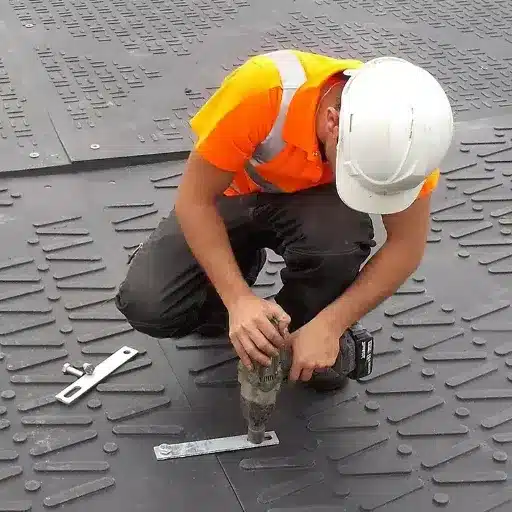
Installing temporary roadway mats for heavy equipment is straightforward, but each step affects safety and performance.
- Clear and grade the route. Remove vegetation, debris, and topsoil. Grade to ±50 mm over 10 m.
- Test the subgrade. A simple CBR test identifies whether a geotextile or aggregate base is needed.
- Install a separation layer if required. On soft or saturated ground, lay a woven geotextile to prevent soil pumping.
- Lay panels in the direction of travel. Start from a firm surface and work outward.
- Stagger joints by half a panel length. This distributes loads across multiple panels.
- Connect all edges before first vehicle use. Unconnected mats shift under braking and turning.
- Add edge ramps at transitions. Ramps reduce trip hazards and allow smooth vehicle entry.
- Anchor on slopes over 10%. Use pins, stakes, or sandbags to prevent creep.
- Enforce speed limits. Keep vehicles below 20 km/h on mat roads to reduce dynamic loading.
- Inspect daily under rolling loads. Look for panel movement, rutting, or joint separation.
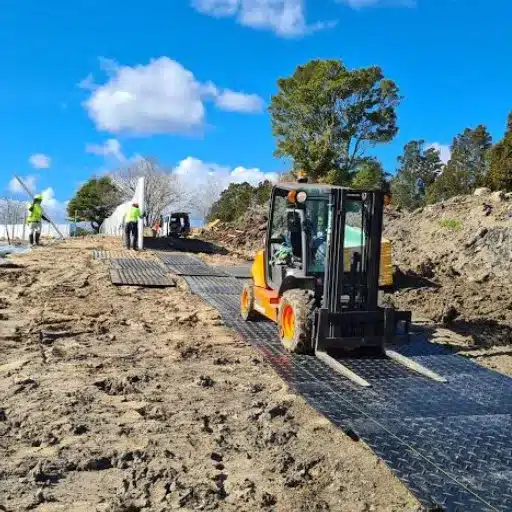
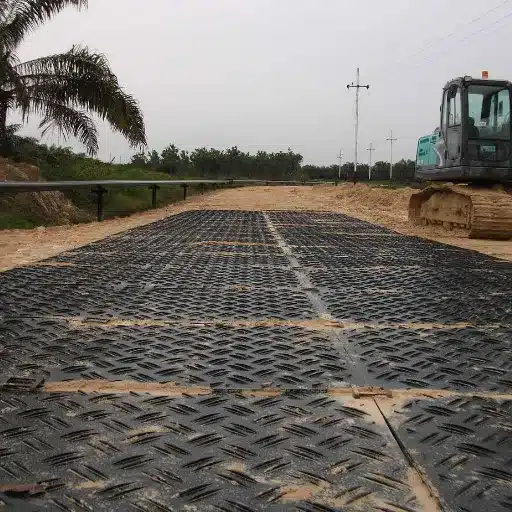
Connected composite mats create a continuous travel surface for crawler cranes over soft ground.
Cost Comparison: Material, Rental, and Lifecycle
The economics of temporary roadway mats for heavy equipment depend on project duration, reuse potential, and handling costs.
| Option | Upfront Cost | Handling | Lifespan | Best For |
|---|---|---|---|---|
| HDPE mats | Low | Manual, two workers | 10–15 years | Short roads, mixed traffic |
| Composite mats | Medium–High | Equipment required | 10–15+ years | Heavy cranes, long-term roads |
| Timber mats | Medium | Equipment required | 3–5 years | Steel tracks, wetland access |
| Steel plates | High | Heavy equipment | 20+ years | Short crossings, extreme loads |
For projects under six months, rental may be the better option. For multi-year infrastructure, renewable energy, or repeated use, purchase offers a stronger ROI. HDPE and composite mats often break even against aggregate roads after 2–3 reuses when installation, removal, and soil remediation costs are included.
Global Sourcing and Quality Assurance
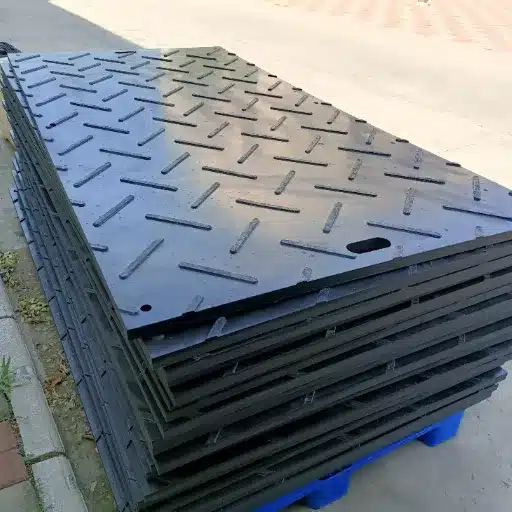
For international buyers, sourcing temporary roadway mats for heavy equipment requires attention to specifications, freight efficiency, and quality systems.
A standard 40-foot high-cube container can hold 200–400 HDPE or composite mats depending on panel size and thickness. Timber mats ship far fewer square meters per container because of their weight and bulk. This logistics difference matters for remote projects overseas.
When sourcing mats for demanding equipment, look for:
- Material test reports confirming density, tensile strength, and UV stabilization
- ISO9001 quality management certification
- Batch traceability and sample retention programs
- Connection hardware rated for the expected loads
- Clear load capacity data for the panel thickness supplied
At Shanxi Shengxing, we manufacture HDPE and composite temporary roadway mats under strict quality control. We also provide technical consultation for project-specific specifications, including road layout, connection systems, and container loading plans for your destination.
Browse heavy equipment access mats or request a technical quote for your project.
Frequently Asked Questions
What are temporary roadway mats for heavy equipment?
Temporary roadway mats for heavy equipment are engineered panels that create stable access roads and work platforms for machines such as crawler cranes, dump trucks, drilling rigs, and tracked excavators. They distribute concentrated loads over a wider area to protect the subgrade.
Can HDPE mats support steel-tracked equipment?
No. Standard HDPE mats are not suitable for steel-tracked equipment. Steel grouser bars concentrate load and can cut or gouge HDPE. Use hardwood crane mats or specialized composite systems rated for steel tracks.
What thickness mat do I need for a 100-ton crawler crane?
For a 100-ton crawler crane on firm ground, use 20–25 mm composite mats or 25–38 mm UHMWPE mats. On soft ground, add a geotextile separation layer and consider thicker composite or timber crane mats.
How wide should a temporary road be for heavy equipment?
A single-lane temporary road should be at least 3 m wide. Two-way traffic needs 6 m. Large crawler cranes and haul trucks need a 12–15 m turning radius, with passing bays every 100–150 m on single-lane routes.
Do I need geotextile under crane mats?
On firm, dry ground, geotextile may not be necessary. On soft clay, peat, or saturated soils, a woven geotextile separation layer prevents soil pumping and improves bearing capacity. For very weak subgrades, add a geogrid-reinforced aggregate base.
Are timber mats better than composite mats for cranes?
Timber mats are better for steel-tracked equipment and can bridge uneven ground effectively. Composite mats are lighter, last longer, and are easier to transport. The right choice depends on track type, load, and project duration.
How much weight can temporary roadway mats hold?
Load capacity depends on the material and thickness. HDPE mats typically support 30–120 tons, composite mats 100–600+ tons, and hardwood crane mats 50–300+ tons. Actual capacity drops 30–50% on soft soils.
Conclusion
Temporary roadway mats for heavy equipment turn unstable ground into safe access for crawler cranes, dump trucks, drilling rigs, and tracked machinery. The right choice depends on three factors: equipment weight and track type, ground condition, and project duration.
On firm ground, 20–25 mm HDPE or composite mats handle most rubber-tired and rubber-tracked traffic. Steel-tracked equipment and extreme point loads call for 150–200 mm hardwood crane mats or specialized composite systems. On soft or saturated soils, add a geotextile separation layer and apply a 30–50% capacity reduction.
For global project buyers, composite and HDPE mats also simplify logistics. Their lighter weight allows more square meters per container, and their longer lifespan supports reuse across multiple sites.
If you need help specifying temporary roadway mats for heavy equipment, contact our engineering team for a tailored recommendation and quotation.