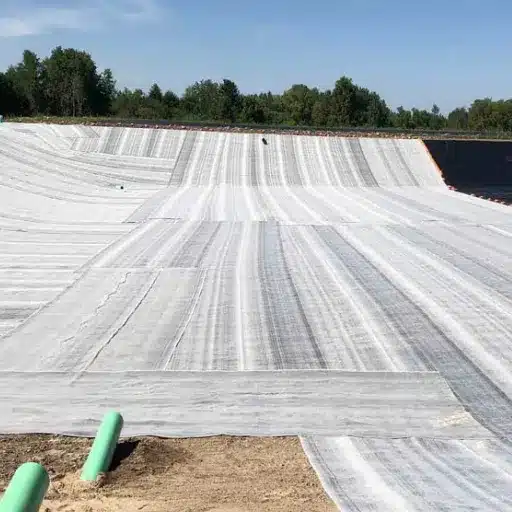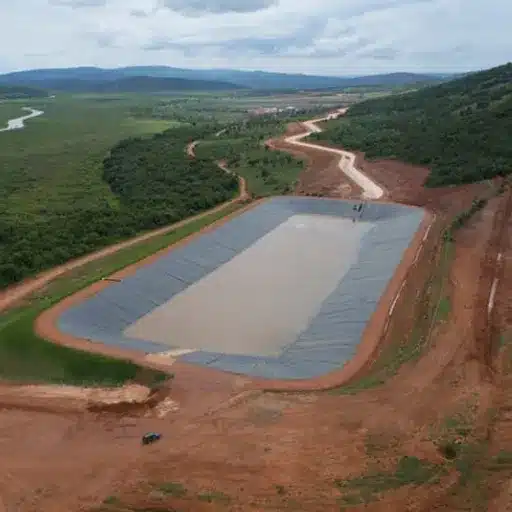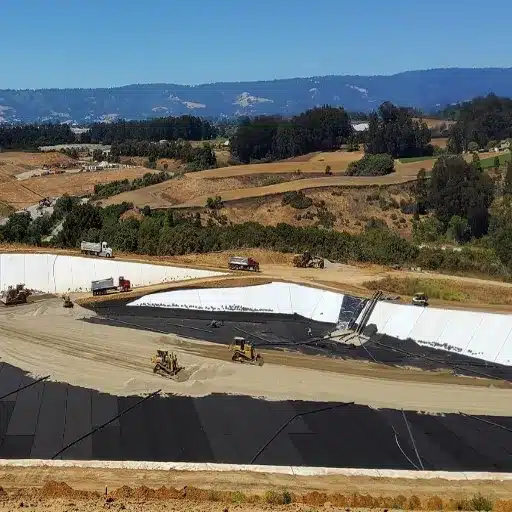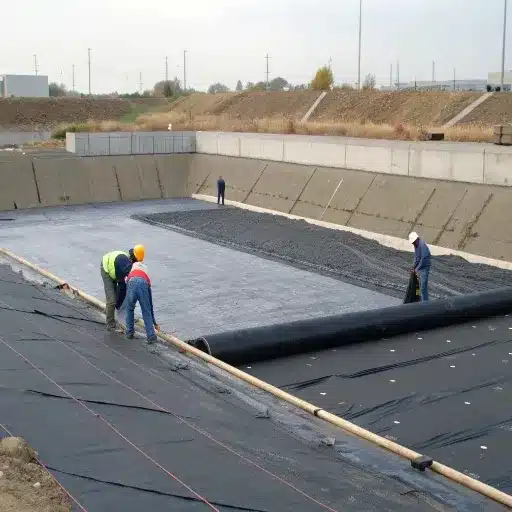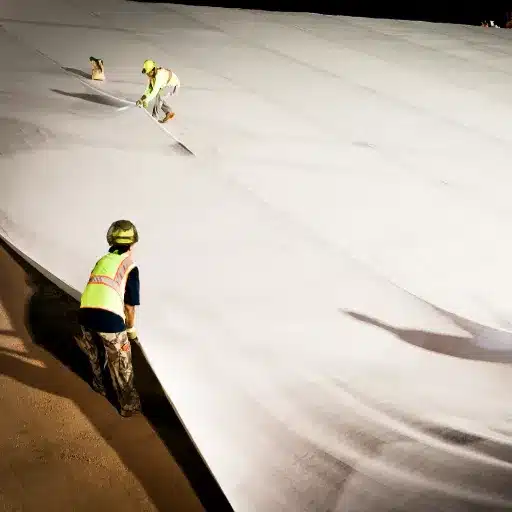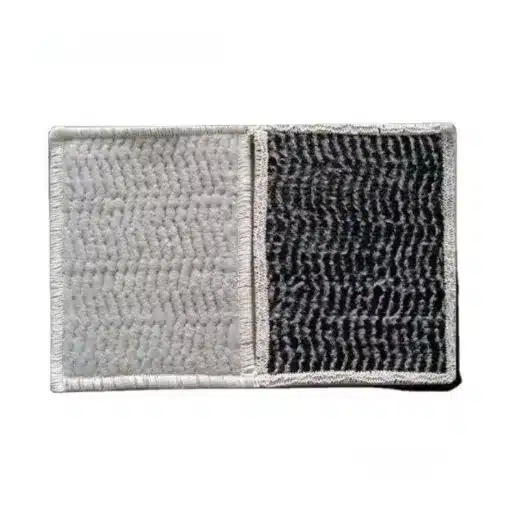
Geotextile fabric is a permeable synthetic textile placed within soil, rock, or aggregate to improve stability, provide filtration, and control erosion in civil engineering projects. Made primarily from polypropylene or polyester, it performs five core functions: separation, filtration, drainage, reinforcement, and erosion control. The choice between woven and nonwoven geotextile fabric depends entirely on your project’s load requirements, soil conditions, and hydraulic demands.
But here’s the problem most engineering buyers face: selecting the wrong fabric type or grade can lead to drainage failure, structural instability, or premature material degradation. A nonwoven geotextile placed under a heavy haul road will rut and tear. A woven geotextile wrapped around a French drain will clog and flood. The consequences are expensive, and they are avoidable.
This guide provides a practical framework for specifying, procuring, and installing geotextile fabric with confidence. You will learn how to match fabric type to application, interpret ASTM and AASHTO specifications, avoid the most common installation mistakes, and budget accurately for your project.
Key Takeaways
- Woven geotextiles deliver high tensile strength for soil reinforcement and road stabilization; nonwoven geotextiles provide superior filtration and drainage.
- The five core functions of geotextile fabric are separation, filtration, drainage, reinforcement, and erosion control—each requiring a different fabric specification.
- ASTM D4632 (grab tensile), D4491 (permittivity), D4751 (apparent opening size), and AASHTO M288 are the critical standards for specifying geotextile fabric correctly.
- UV exposure limits and overlap requirements vary by application: cover within 24–48 hours and overlap 12–36 inches depending on load and slope conditions.
- Manufacturer-direct pricing for standard geotextile fabric ranges from 0.20to0.20to5.00 per square meter, with bulk orders unlocking 15–30% discounts.
What Is Geotextile Fabric?
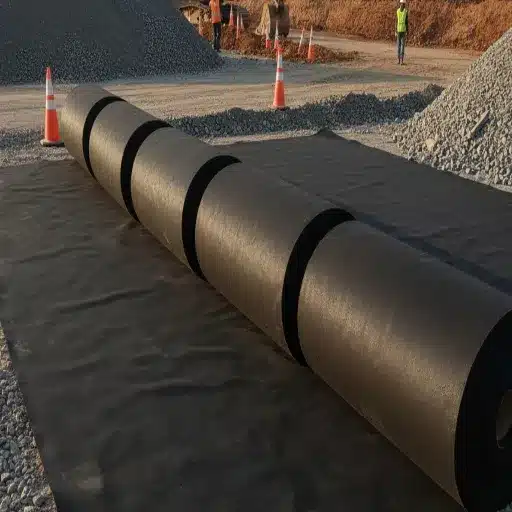
Geotextile fabric is any permeable textile material used with foundation soil, rock, earth, or other geotechnical engineering-related material as an integral part of a man-made project, structure, or system. This definition, drawn from ASTM D4439, captures the essential characteristic that distinguishes geotextiles from other civil engineering materials: they are designed to interact with soil while allowing water to pass.
Material Composition
Nearly all modern geotextile fabrics are manufactured from synthetic polymers:
- Polypropylene (PP): Accounts for approximately 62% of global geotextile production. PP offers excellent chemical resistance, high tensile strength, and low moisture absorption. It performs well in environments with a pH range from 2 to 13.
- Polyester (PET): Represents most of the remaining market share. PET provides higher creep resistance than PP and maintains strength under sustained loads. It is preferred for long-term reinforcement applications where load duration exceeds 1,000 hours.
Natural fiber geotextiles (jute, coir) exist for temporary erosion control but degrade within 2–5 years and are unsuitable for permanent infrastructure. For a detailed polymer performance comparison, see our polypropylene vs polyester geotextile guide.
Manufacturing Methods
Geotextile fabric is produced through three primary processes, each yielding distinct performance characteristics:
| Manufacturing Method | Fabric Type | Key Characteristics |
|---|---|---|
| Weaving (warp and weft yarns) | Woven geotextile | High tensile strength, low elongation, low-to-moderate permeability |
| Needle-punching or heat-bonding | Nonwoven geotextile | High permeability, conformable, excellent filtration |
| Knitting (interlocked yarn loops) | Knitted geotextile | High flexibility, specialized applications |
Woven monofilament geotextiles represent a hybrid: individual monofilament threads are woven to create a fabric with both high strength and relatively open porosity, making them suitable for shoreline protection and drainage channels where filtration and strength are both required.
Market Context
The global geotextile fabric market was valued at approximately 9.5billionin2026andisprojectedtoreach9.5billionin2026andisprojectedtoreach15.8 billion by 2033, growing at a 7.4% compound annual growth rate. Asia Pacific dominates with roughly 35.4% of global market share, driven by infrastructure expansion in China and India. Roadways and highways represent the largest application segment at approximately 42% of total demand.
Woven vs. Nonwoven Geotextile Fabric: How to Choose
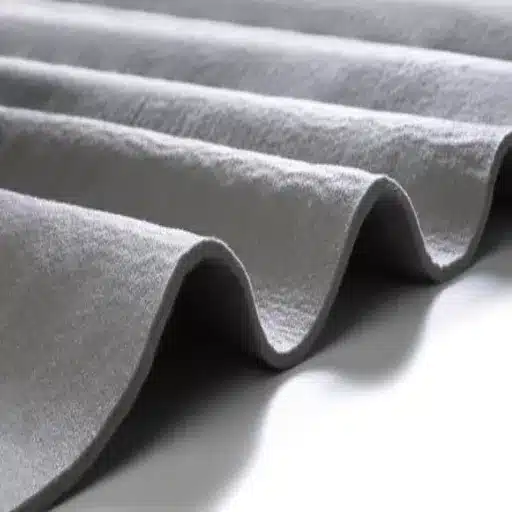
When Marcus Chen, a project engineer in Jakarta, specified a standard nonwoven geotextile for a heavy equipment access road over soft clay, he assumed the 200 gsm fabric would handle the load. Within two weeks, ruts appeared. Construction equipment had to be rerouted, costing the project eleven days and $34,000 in delay penalties. The fabric had not failed; it had been the wrong fabric for the job. A woven geotextile with a tensile strength above 1,100 N would have distributed the wheel loads correctly.
This scenario repeats across job sites worldwide. The woven vs. nonwoven decision is not about quality. It is about matching mechanical and hydraulic properties to project demands. For a deeper technical comparison with selection decision trees, see our complete woven vs nonwoven geotextile guide.
Construction and Fiber Structure
Woven geotextiles are produced on looms by interlacing warp (lengthwise) and weft (crosswise) yarns. The resulting fabric is rigid, dimensionally stable, and highly resistant to elongation under load. Yarn types include slit-film (flat tape), monofilament (round single fiber), and multifilament (bundled fibers). Each yarn type affects strength, flexibility, and filtration performance.
Nonwoven geotextiles are manufactured by bonding staple fibers or continuous filaments through needle-punching (mechanical entanglement), heat-bonding (thermal fusion), or chemical bonding. The resulting fabric is thick, porous, and comfortable. It drapes easily over irregular subgrades and provides isotropic strength properties.
Performance Comparison
| Property | Woven Geotextile | Nonwoven Geotextile |
|---|---|---|
| Grab tensile strength | 700–2,500 N | 400–1,400 N |
| Elongation at break | 10–30% | 30–80% |
| Permittivity | Low to moderate | High |
| Apparent Opening Size (AOS) | Coarse (0.1–0.6 mm) | Fine to coarse (0.05–0.3 mm) |
| Puncture resistance (CBR) | Moderate to high | High |
| UV resistance | Good (with stabilization) | Good (with stabilization) |
| Cost per m² | 0.30–3.00 | 0.20–2.00 |
| Best for | Reinforcement, separation | Filtration, drainage, erosion control |
When to Specify Woven
Specify woven geotextile fabric when the primary function is reinforcement or separation under significant mechanical stress:
- Road and railway construction over soft subgrades (CBR < 3)
- Embankment construction on weak foundations
- Retaining wall and steep slope stabilization
- Unpaved access roads for heavy equipment
- Aggregate base courses requiring load distribution
For these applications, select a woven geotextile with grab tensile strength exceeding 1,100 N and elongation below 25% to ensure adequate stiffness and minimal deformation under wheel loads. See our woven geotextile applications guide for detailed product specifications and load distribution data.
When to Specify Nonwoven
Specify nonwoven geotextile fabric when hydraulic performance (filtration and drainage) is the critical requirement:
- French drains and subsurface drainage systems
- Geomembrane protection layers in landfill liners
- Filtration behind retaining walls and bridge abutments
- Erosion control on slopes and channels
- Separation between fine-grained soils and granular fills
For drainage applications, prioritize high permittivity (ASTM D4491) and appropriate AOS (ASTM D4751) matched to the protected soil’s gradation. Our nonwoven geotextile drainage guide covers the complete specification and installation process for these exact hydraulic applications. Browse our nonwoven geotextile fabric for drainage applications product range for project-specific grades and GSM options.
Combination Applications
In some projects, both functions are required simultaneously. A composite system using woven geotextile for reinforcement with a nonwoven layer for filtration can solve complex design challenges. Alternatively, high-strength woven monofilament fabrics combine the tensile properties of woven textiles with the permeability characteristics of nonwovens.
The Five Core Functions of Geotextile Fabric
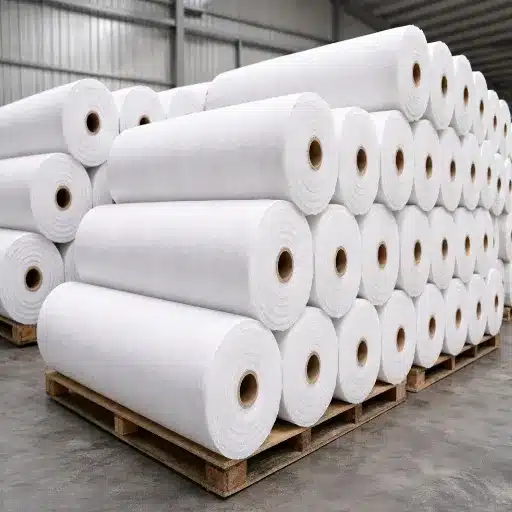
Understanding the five functions is essential for correct specification. Every geotextile application involves one or more of these roles, and fabric selection must prioritize the dominant function.
Separation
Separation prevents the intermixing of adjacent soil and aggregate layers. Without a separation geotextile, fine subgrade soil pumps upward into the aggregate base under traffic loading, contaminating the drainage layer and reducing its load-bearing capacity. Over time, this intermixing can reduce pavement service life by 40–60%.
Specification guidance: Any geotextile with adequate puncture resistance and survivability can perform separation. For unpaved roads, AASHTO M288 specifies minimum survivability properties based on subgrade strength and aggregate contact pressure. Learn more in our geotextile separation and filtration engineering guide.
Filtration
Filtration allows water to pass through the geotextile while retaining soil particles on the upstream side. The geotextile acts as a surrogate for a graded granular filter, but with significantly faster installation and consistent properties.
Specification guidance: Match the geotextile’s AOS (ASTM D4751) to the protected soil’s D85 particle size. A common rule is AOS ≤ D85 of the protected soil. Nonwoven geotextiles are preferred for filtration due to their tortuous pore structure and high permeability.
Drainage
Drainage involves transmitting fluids within the plane of the geotextile. In a French drain, for example, water enters the nonwoven geotextile from the surrounding soil and travels along the fabric to the perforated pipe. The geotextile must provide sufficient in-plane transmissivity to handle the design flow rate.
Specification guidance: Select nonwoven geotextiles with high permittivity (ASTM D4491) and adequate thickness under load. For high-flow applications, consider geocomposite drains that combine a geotextile filter with a geonet core. See our nonwoven geotextile drainage guide for French drain installation steps and flow rate calculations.
Reinforcement
Reinforcement improves the load-bearing capacity of soil by providing tensile resistance. The geotextile absorbs tensile stresses that would otherwise cause the soil to deform or fail. This mechanism is particularly valuable over soft subgrades where the geotextile acts as a tensioned membrane, bridging soft spots and distributing loads over a wider area.
Specification guidance: Woven geotextiles with high tensile strength and low creep are required. Specify wide-width tensile strength (ASTM D4595) rather than grab tensile for design calculations, as wide-width testing better represents field behavior under distributed loads. Explore geotextile soil stabilization techniques for road base design, or compare geogrid vs geotextile reinforcement when selecting the right geosynthetic.
Erosion Control
Erosion control uses geotextile fabric to protect soil surfaces from the detaching action of water or wind. Beneath riprap on a channel slope, for example, the geotextile prevents soil loss through the voids between rock armor pieces while allowing groundwater to drain.
Specification guidance: Woven monofilament or nonwoven geotextiles are used depending on armor type and hydraulic stress. UV resistance (ASTM D4355) is critical if the fabric will be exposed during installation. Our geotextile erosion control guide covers slope protection, riprap filters, and anchoring requirements.
Geotextile Fabric Specifications and Standards
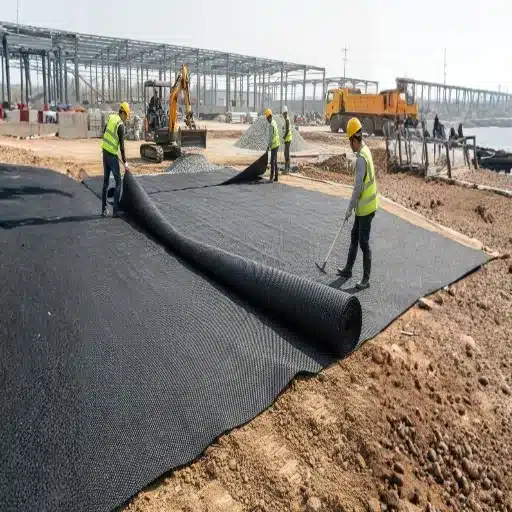
Engineering procurement teams often receive geotextile submittals that list test values without context. Understanding the relevant ASTM and AASHTO standards transforms the specification from guesswork into an engineering discipline.
ASTM Standards Overview
For a deep-dive reference on each test method with procurement checklists, see our geotextile ASTM standards explained guide.
| ASTM Standard | Test Property | Relevance |
|---|---|---|
| D4439 | Terminology for geosynthetics | Defines all geotextile-related terms |
| D4632 | Grab tensile strength and elongation | Quick strength assessment for quality control |
| D4595 | Wide-width tensile strength | Design-level tensile properties for reinforcement |
| D4491 | Water permittivity | Hydraulic conductivity perpendicular to the fabric plane |
| D4751 | Apparent Opening Size (AOS) | The largest soil particle that can pass through the fabric |
| D4833 | Index puncture resistance | Resistance to sharp object penetration |
| D6241 | Static puncture (CBR) | Puncture resistance under rigid plate loading |
| D4355 | UV resistance | Strength retention after accelerated weathering |
AASHTO M288 Classes and Applications
AASHTO M288 simplifies geotextile specification for highway applications by grouping requirements into three survivability levels and multiple application categories.
Survivability Levels:
| Level | Subgrade CBR | Aggregate Thickness | Installation Conditions |
|---|---|---|---|
| Class 1 (High) | < 1% | < 150 mm | Harsh: sharp angular aggregate, heavy equipment |
| Class 2 (Moderate) | 1–3% | 150–300 mm | Moderate: standard construction practices |
| Class 3 (Low) | > 3% | > 300 mm | Mild: smooth subgrade, light equipment |
Higher survivability classes require greater grab tensile strength, tear strength, puncture resistance, and CBR puncture values. For most road stabilization projects, Class 1 or Class 2 geotextiles are specified.
Application Categories under AASHTO M288 include:
- Subsurface drainage (nonwoven preferred)
- Separation (woven or nonwoven)
- Stabilization (woven preferred for reinforcement)
- Permanent erosion control (woven monofilament or nonwoven)
- Sediment control (temporary nonwoven)
Specification Table by Application
| Application | Recommended Fabric | Minimum Grab Tensile (N) | AOS (mm) | Permittivity (sec⁻¹) |
|---|---|---|---|---|
| Road stabilization (soft subgrade) | Woven, Class 1 | 1,100 | ≤ 0.60 | ≥ 0.02 |
| French drain filtration | Nonwoven, 200–400 gsm | 800 | ≤ 0.25 | ≥ 0.50 |
| Landfill geomembrane protection | Nonwoven, 400–800 gsm | 1,000 | ≤ 0.30 | ≥ 0.10 |
| Erosion control under riprap | Woven monofilament | 1,400 | ≤ 0.43 | ≥ 0.10 |
| Retaining wall drainage | Nonwoven, 200–300 gsm | 700 | ≤ 0.25 | ≥ 0.50 |
Certification Checklist for Procurement
Before accepting geotextile fabric for your project, verify:
- The manufacturer provides mill test reports with lot numbers
- ASTM or ISO test certificates are current (within 12 months)
- UV stabilization is confirmed if exposure will exceed 14 days
- Roll dimensions and packaging match project requirements
- Material safety data sheet (MSDS) is available for polyester products
- Custom specifications (width, length, weight) are documented in the purchase order
Applications by Industry
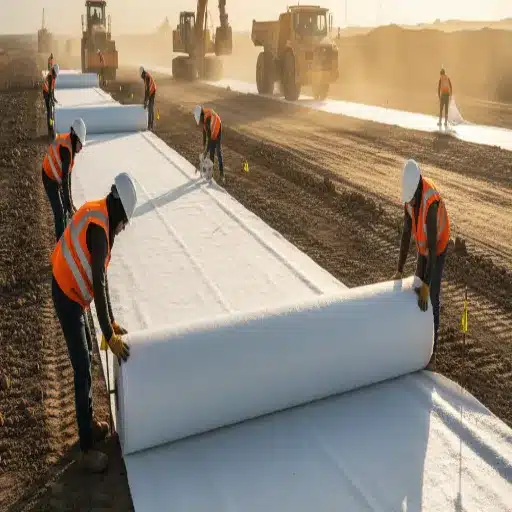
Geotextile fabric serves as a foundational material across virtually every sector of civil and environmental engineering. The following applications illustrate how the five core functions translate into real project outcomes.
Road Construction and Soil Stabilization
In road construction, woven geotextile fabric for soil reinforcement performs separation and reinforcement simultaneously. Placed between a soft subgrade and the aggregate base course, it prevents subgrade soil from contaminating the aggregate while the woven fabric’s tensile strength improves the effective bearing capacity of the system.
For a highway project in Southeast Asia, engineers placed a 1,500 N grab tensile woven geotextile over a soft clay subgrade with CBR = 0.8. The fabric allowed a 30% reduction in aggregate base thickness while maintaining equivalent pavement life. Construction equipment traversed the subgrade without rutting, and the pavement remained serviceable after three monsoon seasons. Read the full geotextile soil stabilization technical guide for design calculations and CBR improvement methods.
Retaining Walls and Embankments
Behind retaining walls, nonwoven geotextile fabric acts as a drainage layer and filtration medium. Water that accumulates in the backfill drains through the geotextile to a collector pipe, preventing hydrostatic pressure buildup that could destabilize the wall.
For embankments on soft foundations, woven geotextile reinforcement at the base increases the factor of safety against bearing capacity failure and allows steeper side slopes. This reduces embankment footprint and minimizes right-of-way requirements. Our geotextile retaining wall design guide covers drainage integration and embankment construction protocols.
Drainage Systems and French Drains
French drains rely on nonwoven geotextile fabric to encapsulate clean gravel and perforated pipe. The fabric prevents surrounding soil from infiltrating the gravel, which would eventually clog the system and reduce flow capacity.
When a landscape contractor in Texas installed a French drain without geotextile filtration, clay soil infiltrated the gravel within 18 months. The drain failed during the first heavy rainfall, flooding a residential foundation. Reinstallation with a properly specified nonwoven geotextile (AOS 0.15 mm, 250 gsm) solved the problem permanently.
Landfill and Environmental Containment
In composite landfill liner systems, nonwoven geotextile fabric serves as a protective cushion between the geomembrane and overlying soil or drainage aggregate. It prevents puncture of the geomembrane by sharp stones and provides a friction interface that improves slope stability. For projects evaluating barrier alternatives, see our geosynthetic clay liner alternatives guide.
The geotextile also functions as a drainage layer in the leachate collection system, transmitting collected leachate to sumps while filtering out fine particles. For these critical applications, heavyweight nonwoven geotextiles (600–800 gsm) with high puncture resistance are standard.
Coastal and Slope Erosion Control
On coastal embankments and river channel slopes, geotextile fabric placed beneath riprap or articulated concrete blocks prevents soil loss through armor voids. Woven monofilament geotextiles are preferred for high-energy hydraulic environments because they combine strength with open porosity.
For vegetated slopes, biodegradable nonwoven geotextiles (sometimes called erosion control blankets) protect seed and topsoil from raindrop impact and runoff until vegetation establishes. These temporary products degrade within 1–3 years, leaving the root system to provide long-term stabilization.
Geotextile Fabric Installation: Best Practices
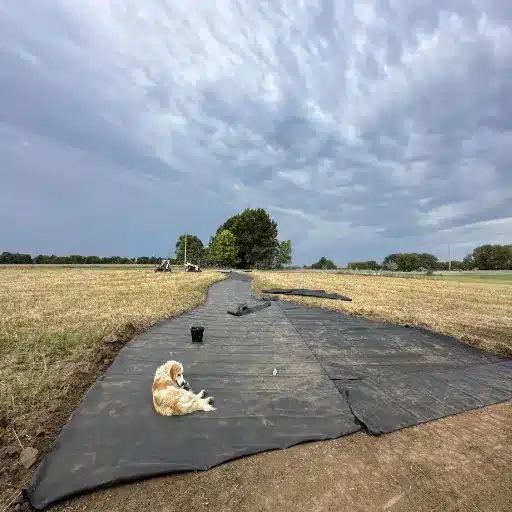
Even a correctly specified geotextile will underperform if installed incorrectly. The following protocol reflects field-proven practices across thousands of projects. For a comprehensive installation protocol with the seven most common mistakes, see our geotextile installation guide.
Subgrade Preparation
Remove all vegetation, organic material, and debris from the installation area. Fill potholes and ruts with acceptable fill material. The subgrade should be smooth and free of protrusions that could puncture the fabric. For separation applications, subgrade compaction to 95% of standard Proctor density is typically required.
Laying and Placement
Unroll the geotextile fabric in the direction of the principal stress or construction traffic. Maintain the fabric in a relaxed state—do not stretch or tension it during placement. Overlap adjacent rolls according to application requirements.
Overlap guidelines:
| Application | Minimum Overlap | Notes |
|---|---|---|
| Standard separation/filtration | 300 mm (12 in) | Sufficient for flat ground, light loads |
| Soft subgrade (CBR < 1) | 450–900 mm (18–36 in) | Greater overlap prevents gaps under deformation |
| High loads / steep slopes | Sewn seams required | Overlap alone is insufficient |
| Geomembrane protection | 150 mm (6 in) | Minimum for cushion layers |
For critical reinforcement applications, sew seams with high-strength polypropylene thread. Sewn seams should achieve at least 80% of the fabric’s width-wise tensile strength.
Anchoring
At the top of the slopes, bury the geotextile in an anchor trench approximately 300 mm deep. On flat ground, use sandbags or temporary staples to hold the fabric until backfill placement. Never leave fabric unsecured in windy conditions.
UV Exposure Limits
Unprotected polypropylene and polyester geotextiles degrade under ultraviolet radiation. Cover the fabric with backfill within 24 hours of placement, and never exceed 48 hours of direct UV exposure. For installations where temporary exposure is unavoidable, specify UV-stabilized geotextiles tested per ASTM D4355 with a minimum 70% strength retention after 500 hours.
Aggregate Placement
Place backfill from the edge of the work area, pushing material onto the geotextile rather than dumping from height. Do not drive construction equipment directly on the exposed geotextile. Compact the aggregate layer, not the fabric itself. Use static rollers rather than vibratory compactors on soft subgrades (CBR < 1) to avoid fabric displacement.
Common Installation Mistakes and How to Avoid Them
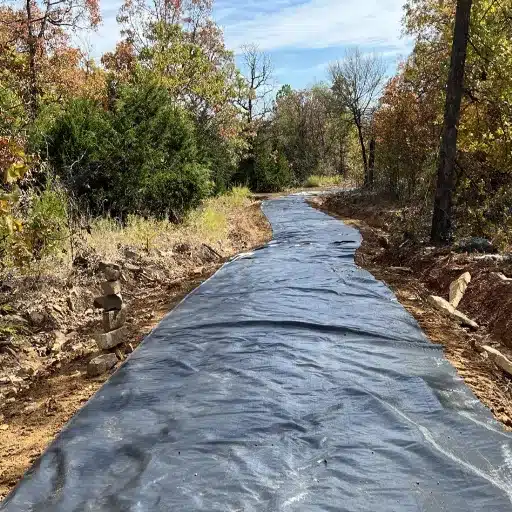
Field failures of geotextile systems are rarely caused by defective material. They are caused by specification errors, installation shortcuts, and inadequate quality control.
Wrong Fabric Type for the Application
Using nonwoven geotextile for heavy-load reinforcement or woven geotextile for fine-grained soil filtration produces predictable failures. Always match the fabric’s dominant property to the application’s primary function.
Inadequate Overlap on Soft Soils
On soft subgrades, geotextile fabric deforms under construction traffic. A 300 mm overlap that seems adequate on firm ground can separate to reveal gaps on CBR < 1 soils. Increase overlap to 450–900 mm or specify sewn seams.
Prolonged UV Exposure
Geotextile left exposed for weeks during construction scheduling delays can lose 50–80% of its tensile strength. Track installation progress and enforce the 24–48 hour cover requirement. If delays are anticipated, use UV-stabilized fabric or temporary protective sheeting.
Vibratory Compaction on Weak Subgrades
Vibratory rollers transmit dynamic energy through the aggregate into the geotextile and subgrade. On soft soils, this energy causes fabric displacement, aggregate punching, and subgrade pumping. Switch to static compaction or lightweight pneumatic rollers.
Using Debris-Laden Aggregate
Aggregate contaminated with soil, organic matter, or fines placed directly on the geotextile negates the separation function. Specify clean, hard, angular aggregate and enforce source quality control.
Ignoring AOS and Soil Compatibility
A geotextile with an AOS too large for the protected soil allows soil piping and eventual clogging. A geotextile with an AOS too small restricts flow and causes head buildup. Match AOS to D85 of the protected soil, and verify with site-specific filtration tests for problematic soils (gap-graded, dispersive, or high-plasticity clays).
Geotextile Fabric Cost Factors
Accurate budgeting requires understanding the variables that drive geotextile pricing. The following ranges reflect 2026 manufacturer-direct pricing for bulk orders. For a transparent breakdown by material, GSM, and region with cost-saving strategies, see our geotextile fabric cost per square meter guide.
Cost Per Square Meter by Type and Weight
| Fabric Type | Weight (gsm) | Bulk Price (USD/m²) | Distributor Price (USD/m²) |
|---|---|---|---|
| Nonwoven | 100–200 | $0.20–$0.50 | $1.60–$3.20 |
| Nonwoven | 200–400 | $0.40–$0.90 | $3.20–$5.40 |
| Nonwoven | 400–800 | $0.80–$2.00 | $4.30–$10.76 |
| Woven (standard) | 100–250 | $0.30–$1.00 | $2.15–$5.40 |
| Woven (heavy-duty) | 150–400+ | $1.50–$3.00+ | $5.40–$10.76 |
Most civil engineering projects require fabrics in the $0.50–$3.00/m² range for materials only.
Key Cost Drivers
- Fabric weight (gsm): The primary cost driver. Every doubling of weight typically increases material cost by 30–60%.
- Order volume: Small orders (< 5,000 m²) pay the highest per-unit prices. Bulk orders (50,000–100,000 m²) receive 15–30% discounts.
- Material composition: Polyester geotextiles cost 10–20% more than equivalent polypropylene products.
- Special treatments: UV stabilization, chemical resistance, or fire retardancy add $0.50–$3.20/m² but extend service life by 20–30 years.
- Installation costs: Labor, equipment, staples, and seaming add $0.50–$2.00/m² (20–50% of material cost).
- Raw material volatility: Polypropylene resin prices have risen approximately 8% annually, directly impacting geotextile costs.
Lifecycle Value vs. Upfront Cost
Selecting a lighter, lower-specification geotextile to reduce initial material cost often increases total project cost. In road construction, for example, a properly specified woven geotextile can reduce aggregate base thickness by 25–40%, saving more in aggregate cost than the geotextile adds in material cost. Similarly, a high-quality nonwoven geotextile in a drainage system prevents costly excavation and replacement of a clogged drain.
Need a tailored quote for your geotextile project? Contact our engineering team with your project specifications for a fast, detailed quotation.
Frequently Asked Questions
What is geotextile fabric used for?
Geotextile fabric is used for soil stabilization, erosion control, drainage systems, filtration, separation of soil layers, reinforcement in road construction, and protection of geomembrane liners. Its five core functions make it indispensable in civil engineering, environmental protection, and infrastructure projects.
Does geotextile fabric let water through?
Yes. Geotextile fabric is designed to be permeable, allowing water to pass through while retaining soil particles. Nonwoven geotextiles typically provide superior flow rates compared to woven geotextiles. However, the exact permeability depends on fabric type, weight, and manufacturing method.
How long does geotextile fabric last?
When properly installed and protected from UV exposure, polypropylene and polyester geotextiles can last 20 years or more. UV-stabilized fabrics tested per ASTM D4355 retain over 70% of initial strength after 500 hours of accelerated weathering. In buried applications with no UV exposure, design life can exceed 50 years.
Is geotextile fabric the same as landscape fabric?
No. While both are permeable textiles, geotextile fabric is engineered to ASTM and AASHTO standards for load-bearing, filtration, and drainage performance. Landscape fabric is typically lighter, designed for weed suppression only, and lacks the mechanical properties required for engineering applications.
How much does geotextile fabric cost?
Standard geotextile fabric costs between $0.20 and $5.00 per square meter for material only, depending on type, weight, and order volume. Most civil engineering applications fall in the $0.50–$3.00/m² range. Bulk orders and manufacturer-direct sourcing reduce per-unit costs significantly.
What thickness geotextile do I need?
Thickness is expressed in grams per square meter (gsm), not millimeters. For light drainage, 150–200 gsm nonwoven is sufficient. For road stabilization over soft subgrade, 200–400 gsm woven geotextile is standard. For landfill geomembrane protection, 400–800 gsm nonwoven is typical. Always verify against project-specific design requirements.
What is the difference between geotextile and geomembrane?
Geotextile is permeable, allowing water to pass through while interacting with soil for filtration, drainage, and reinforcement. Geomembrane is impermeable, designed to block liquid and gas migration for containment applications such as landfill liners and pond sealing. The two materials are often used together in composite systems. Learn more about the differences.
Can you use woven and nonwoven geotextiles together?
Yes. Composite systems use woven geotextile for reinforcement with a nonwoven layer for filtration. Alternatively, woven monofilament fabrics provide a single-layer solution that combines high tensile strength with adequate permeability for applications like shoreline protection.
Conclusion
Choosing the right geotextile fabric means matching technical specifications to project demands. The decision between woven and nonwoven is not about quality—it is about function. Woven geotextiles deliver the tensile strength required for soil reinforcement and road stabilization. Nonwoven geotextiles provide the filtration and drainage performance essential for subsurface drainage and environmental containment.
Beyond fabric selection, successful geotextile performance depends on three factors: correct specification against recognized standards (ASTM D4439, AASHTO M288), proper installation with attention to overlap and UV protection, and quality verification through mill test reports and certification checks.
The global geotextile market continues to expand as infrastructure investment accelerates across the Asia Pacific, North America, and emerging markets. Buyers who understand specification fundamentals gain a procurement advantage: they select the right material the first time, avoid costly field failures, and optimize lifecycle project costs.
For engineering teams managing complex civil or environmental projects, working with a supplier that provides technical consultation, certified products, and global logistics support reduces risk and keeps schedules on track.
Ready to specify geotextile fabric for your next project? Request a technical quote or speak with our engineering team for customized recommendations based on your soil conditions, load requirements, and project timeline.