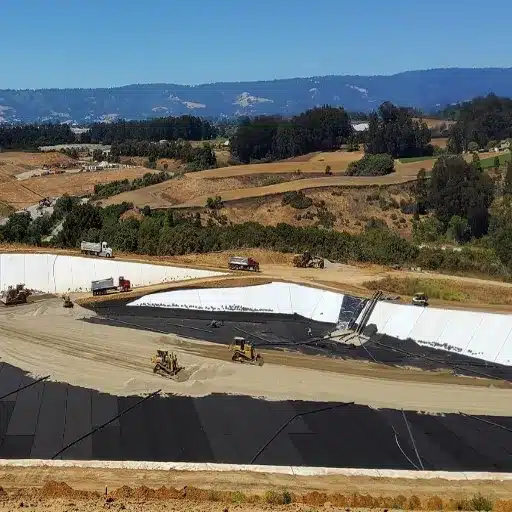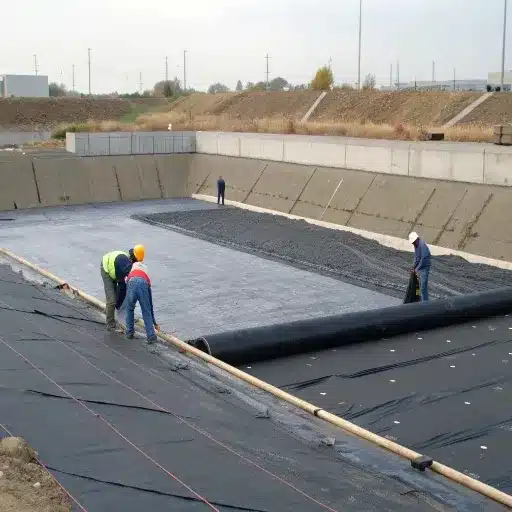
Woven geotextile usually costs 15-40% more per square meter than nonwoven of similar weight, but it is cheaper per kN of tensile strength. So the real answer to “which is more expensive” depends entirely on the job: reinforcement and separation lean woven, while filtration and drainage lean nonwoven. Here is how the prices actually compare in 2026, and when the more expensive fabric is the cheaper decision.
Ask most contractors and they will tell you the same thing: woven costs more, so buy nonwoven. It sounds logical. But when a procurement manager in Sichuan compared two quotes last spring, one for a 500 GSM nonwoven and one for a 120 GSM slit-film woven, the “cheaper” nonwoven was actually 60% pricier per square meter. The old rule was never that simple.
By the end of this guide, you’ll be able to compare woven vs nonwoven geotextile cost on equal terms, know which fabric is cheaper per unit of performance, and see exactly when spending more up front saves the most money. We’ll cover the 2026 price tables, the six cost drivers that matter, the cost-per-kN economics, volume pricing, and the lifecycle math that turns a “cheap” quote into a costly one.
Key Takeaways
- Woven geotextile typically costs 15-40% more per m² than nonwoven of similar weight, because weaving is slower and needs high-tenacity yarns.
- Heavy nonwovens beat light wovens on price: a 400-800 GSM nonwoven ($0.80−$2.00/m²) can cost more than a light slit-film woven ($0.40−$0.90/m²), so the “woven always costs more” rule is wrong.
- Woven is cheaper per kN of tensile strength, making it the value pick for separation and reinforcement; nonwoven is cheapest when you need filtration, drainage, or cushioning.
- Bulk orders over 10,000 m² cut unit cost 10-30%, and retail rolls cost 60-150% more than bulk export pricing.
- Material is only 20-40% of installed cost, and a wrong-fabric failure can cost 50-100x the fabric expense in rework.
The Short Answer: Is Woven or Nonwoven Geotextile More Expensive?
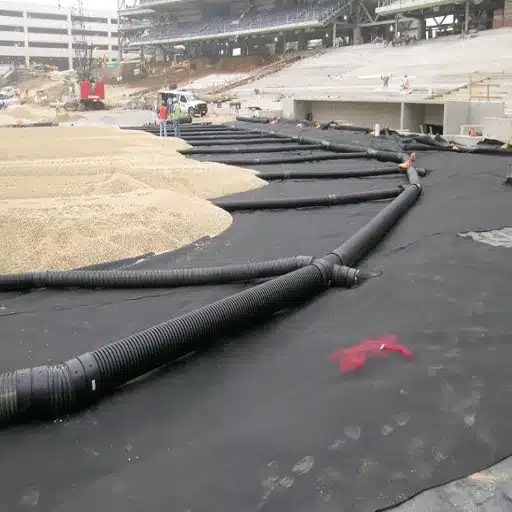
Per square meter, woven geotextile usually costs more than nonwoven at a similar weight, typically 15-40% higher. But that comparison is misleading unless the two fabrics are at the same GSM and spec class. Woven is cheaper per kN of tensile strength, so for separation and reinforcement jobs it is often the lower-cost choice overall. For drainage and filtration, nonwoven is the cheapest fabric that will actually work.
The practical rule of thumb: price by function, not by fabric type. Compare the fabric that meets the job’s minimum strength, puncture, and flow requirements, then compare those prices. Comparing a random woven to a random nonwoven tells you nothing.
Woven vs Nonwoven Geotextile Cost per Square Meter (2026 Pricing)
Below are 2026 bulk FOB/EXW price ranges for common geotextile types at specific weights. These are manufacturer-level export prices; retail landscape rolls cost 60-150% more, and certified Western brands carry their own premium (covered below). For a full price breakdown across all geotextile types, see our geotextile fabric cost per square meter pricing guide.
| Fabric Type | Weight (GSM) | Cost per m² (bulk FOB) | Cost per sq ft | Typical Use |
|---|---|---|---|---|
| Nonwoven (staple fiber) | 100-200 | $−0.20−$0.50 | $0.02−$0.05 | Light filtration, weed control |
| Nonwoven (staple fiber) | 200-400 | $0.40−$0.90 | $0.04−$0.08 | Drainage, cushioning, protection |
| Nonwoven (continuous filament) | 400-800 | $0.80−$2.00 | $0.07−$0.19 | Heavy cushioning, puncture protection |
| Woven slit-film | 90-250 | $0.30−$1.00 | $0.03−$0.09 | Separation, light stabilization |
| Woven monofilament | 130-200 | $0.80−$1.80 | $0.07−$0.17 | Filtration + reinforcement (roads) |
| Woven high-strength (multifilament) | 250-600 | $1.50−$3.00 | $0.14−$0.28 | Heavy reinforcement, retaining walls |
| Woven heavy-duty | 600+ | $3.00−$7.50+ | $0.28-$0.70 | Extreme loads, subgrade stabilization |
These ranges align with the granular per-square-foot tables published by BPM Geosynthetics for the North American market, where nonwovens run $0.12−$1.60 per square foot by weight and woven slit-film runs $0.28−$0.65. Why does weight matter so much? GSM (grams per square meter) is the single biggest price driver, which is why the geotextile GSM weight guide is worth reading before you request quotes. Every additional 100 GSM typically adds $0.10−$0.50 per square meter, depending on polymer and weave type.
Why Woven Costs More (When It Does): 6 Cost Drivers
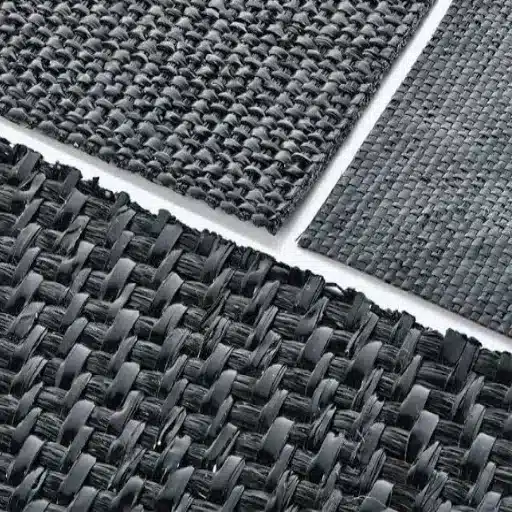
When woven does cost more, six factors explain the gap:
- Manufacturing speed. Weaving is slower than needle-punching nonwoven fabric, so more machine time is baked into each meter.
- Yarn type within woven. Slit-film is the cheapest woven yarn, monofilament sits in the middle, and multifilament is premium. The differences are detailed in our slit-film vs monofilament woven geotextile comparison.
- Weight / GSM. More polymer per square meter always costs more, in both families.
- Polymer choice. Polyester (PET) fabrics cost 15-35% more than polypropylene (PP), with better long-term strength retention.
- Nonwoven subtype. Continuous-filament nonwovens cost 20-50% more than staple fiber at the same weight.
- Certification and grade. AASHTO M288 survivability classes and DOT/NTPEP certifications add a 20-50% premium versus value suppliers with comparable measured performance.
Here is the myth-buster: the blanket claim “woven always costs more” is wrong. A heavy 400-800 GSM nonwoven at $0.80-$2.00/m² routinely costs more than a light 90-140 GSM slit-film woven at $0.40-$0.90/m². Weight and spec class drive price, not the fabric family label. A 200 GSM woven and a 200 GSM nonwoven are not the same product, and they are not the same price. SIGMA Geosynthetics’ geotextile price guide makes the same point: the gap is 15-40%, but only when you compare fabrics of similar weight.
The Engineering View: Cost per Unit of Tensile Strength
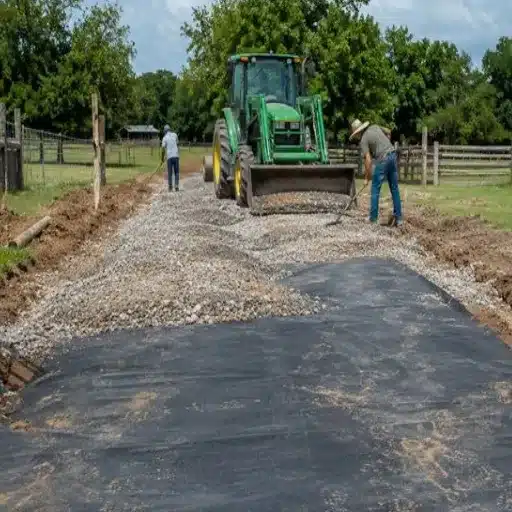
The most useful way to compare woven vs nonwoven geotextile cost is not per square meter, but per kN of tensile strength. This is the metric engineers actually design around, and it flips the pricing story.
Woven geotextile delivers far more tensile strength per gram than nonwoven. A light woven fabric can carry 40-80 kN/m wide-width tensile load (ASTM D4595), while a heavier nonwoven at the same or higher weight carries far less in the load direction. That means for a reinforcement or separation application where tensile capacity is the requirement, woven gives you the strength for less money per kN.
Nonwoven costs more per kN, but that premium buys what woven cannot: in-plane water flow (permittivity, ASTM D4491), filtration (apparent opening size, ASTM D4751), and cushioning. You’re not overpaying for nonwoven; you’re buying a different function. The Geosynthetic Materials Association lays out these distinct engineering roles: woven carries load and separates, while nonwoven filters and drains. Price the function the spec requires, not the fabric label.
The aggregate-reduction math shows why woven wins on total cost in load-bearing ground. Over soft subgrade, woven geotextile lets contractors cut aggregate base thickness by 25-40%, because the fabric distributes load and prevents subgrade pumping. Even at 15-40% higher per-m² price, the aggregate savings dwarf the fabric cost. This is the core argument in our woven vs nonwoven geotextile for road construction breakdown, and it is the reason the “cheaper” nonwoven quote can be the costlier project decision.
Ready to see the numbers on your ground conditions? Send your soil report and load specs to our engineering team for a cost-per-kN comparison on your project. Request a technical quote.
When Woven Is Cheaper Than Nonwoven (Separation and Reinforcement)
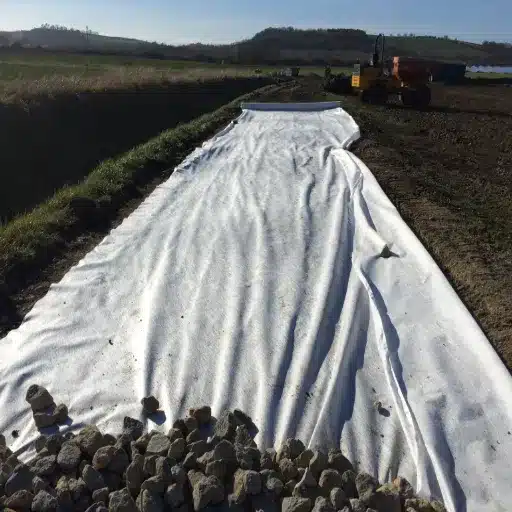
Here is the counterintuitive result most buyers miss: for separation-only jobs, woven can be roughly half the price of the nonwoven that would do the same job.
Few suppliers say this out loud, but a light woven separation fabric achieves the same soil-aggregate separation as a comparable nonwoven, at a lower cost because less polymer is needed to meet the separation spec. For stabilization and reinforcement, woven is likewise the cheapest option per kN of load capacity.
Consider a developer in Texas laying crushed stone over soft clay. The first quote proposed a 6 oz nonwoven at $0.85/m². The engineered alternative was a light woven separation fabric at $0.47/m².
Same separation result, roughly 45% less spent on fabric, and the base layer performed identically. The “woven costs more” rule cost that developer money until someone priced by spec instead of by fabric type.
For residential and light commercial work, the same logic applies to driveways. Our guide to geotextile for gravel driveway: woven or nonwoven explains when the woven choice saves money and when it does not, including the retail-versus-bulk price spreads that distort small orders.
When Nonwoven Is the Cheapest Correct Choice (Filtration and Drainage)
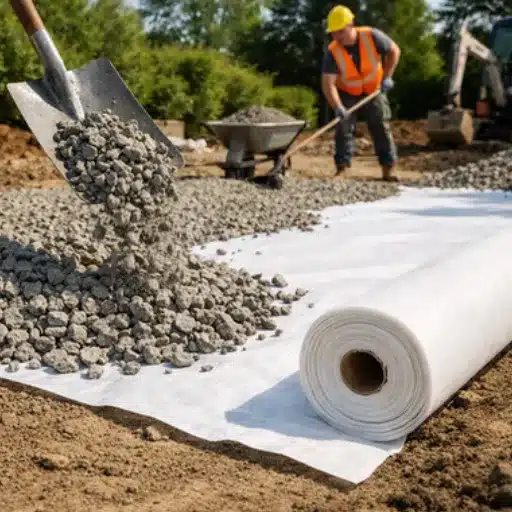
Nonwoven is the lowest-cost fabric that will actually work for drainage, filtration, and protection applications. If water must pass through the fabric while soil stays behind, a 4-6 oz nonwoven is typically the right, cheapest choice. For a French drain, a permeable nonwoven filter fabric lets water into the stone bed while keeping silt out; a cheap woven used as a filter will clog and fail.
That mistake is expensive. A homeowner near Cleveland used leftover slit-film woven as a drainage filter because it was cheap. Within one season the drain clogged, the yard pooled, and the re-grade cost $6,000. The correct 4 oz nonwoven would have cost about $180.
The “savings” on the wrong fabric produced a 33x loss. This failure pattern is exactly why our best geotextile for French drains guide exists. It applies the same way to retaining walls, where a woven used where a drainage composite is needed can cause hydrostatic pressure to build and bulge the wall.
Buy the cheapest fabric that meets the filtration, flow, and strength requirements. Never buy the cheapest fabric and assume it drains, separates, and reinforces all at once. Each fabric family is optimized for one core function.
Order Volume and Bulk Pricing: How to Cut Cost per Square Meter
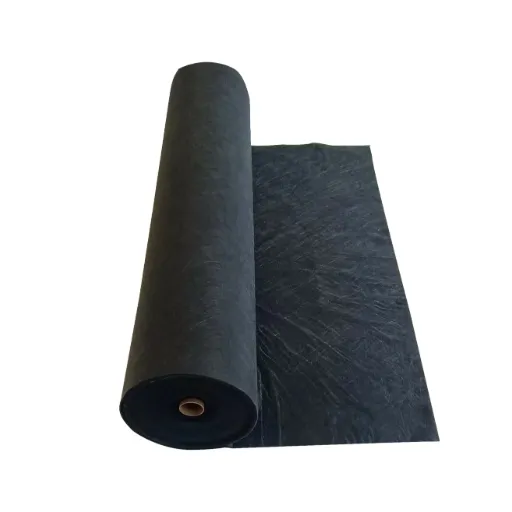
The biggest lever on geotextile price is order volume. Volume discounts are the lever most retail buyers never see.
- Bulk orders over 10,000 m² cut unit cost by 10-30% versus small lots.
- Full-truckload or container orders add another 12-20% off.
- Retail rolls cost 60-150% more than the same fabric bought in bulk.
- Freight and landed cost (FOB, EXW, CIF) can swing the effective price as much as the fabric price itself for export buyers.
An infrastructure buyer in the Philippines needed 22,000 m² for a wastewater project. Instead of two separate orders at 11,000 m² each, the buyer consolidated into a single container shipment. That one decision cut per-m² cost by about 18% and eliminated a second freight charge, saving roughly $9,000 on the job.
Standard roll widths matter too. A 4.0 m wide roll covers more area per linear meter and needs fewer overlaps and seams than a 1.5 m roll, cutting both fabric waste and install labor. Ask your supplier about roll-width options before comparing prices.
As a direct manufacturer, Shanxi Shengxing offers flexible minimum order quantities and volume pricing that fits pilot, small, and mid-scale projects, with FOB/EXW terms for international buyers. If you are planning a project, request a quote for your actual quantity rather than extrapolating from a retail roll price.
When the Cheapest Geotextile Costs the Most: Lifecycle Value
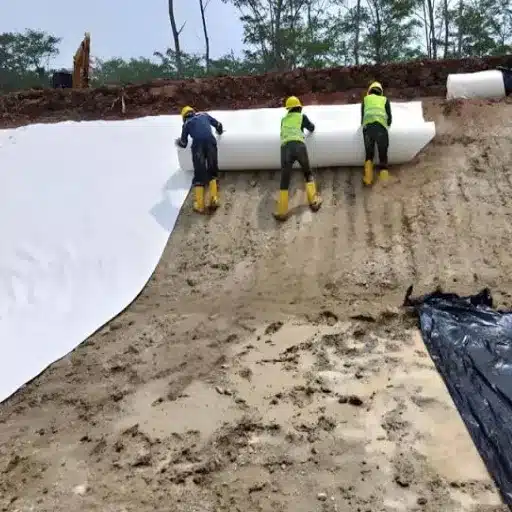
The final layer of the cost question is time. Cost per square meter is the wrong metric. Cost per year of service is the right one.
A wrong-fabric choice produces failure economics that swamp any per-m² savings. Three examples from real projects:
- Road rutting. A contractor specified a low-grade nonwoven for a heavy-haul stabilization job because it was the cheapest quote. Within weeks the base rutted and the section had to be dug up and rebuilt. The correct Class 1 woven cost about 25% more per m² but carried the load and cut aggregate 30%, making the total project cost lower, not higher.
- French drain clog. A 4-6 oz nonwoven filter fails only when the wrong fabric is substituted. The drain-clog remediation costs 50-100x the fabric expense, as the Cleveland example above showed.
- Retaining-wall bulge. Using woven where drainage is required builds hydrostatic pressure behind the wall. The repair bill, covered in detail in our geotextile for retaining wall: woven or nonwoven guide, runs far beyond any material savings.
The correct way to evaluate a quote is lifecycle cost: material price, aggregate savings, installation labor, and expected service life. Material is typically only 20-40% of installed cost; labor and equipment are 40-60%. A 15% woven fabric premium that eliminates aggregate and rework risk is cheap insurance. A 20% “savings” on the wrong fabric is a gamble with your project schedule.
For the full comparison framework that weighs every fabric family across applications, start with our woven vs nonwoven geotextile selection guide, which is the hub this cost guide feeds into.
Frequently Asked Questions
Is woven or nonwoven geotextile more expensive?
Per square meter, woven typically costs 15-40% more than nonwoven of similar weight. But woven is cheaper per kN of tensile strength, and heavy nonwovens can cost more than light wovens, so the answer depends on the specs the job requires.
How much does geotextile cost per square meter in 2026?
Bulk FOB prices range from $0.20-$0.50/m² for light 100-200 GSM nonwoven, $0.30-$1.00/m² for slit-film woven, up to $3.00-$7.50+/m² for heavy-duty 600+ GSM woven. Retail rolls cost 60-150% more.
Why is geotextile fabric so expensive?
Price is driven by GSM, polymer type (PET costs more than PP), manufacturing method (woven vs nonwoven), continuous-filament versus staple fiber, and certification grade. Heavier, higher-strength, certified fabrics cost more.
Is woven geotextile worth the extra cost?
For separation and reinforcement, yes. Woven gives more tensile strength per gram and can cut aggregate base 25-40%, often lowering total project cost. For drainage and filtration, a permeable nonwoven is the right (and cheaper) choice.
Does installation cost more than the fabric?
Usually. Material is typically 20-40% of installed cost; labor and equipment are 40-60%. Woven installation adds roughly 15% for specialized equipment in some applications.
How much can I save buying geotextile in bulk?
Orders over 10,000 m² typically cut unit cost 10-30%, and full container shipments add another 12-20%. Retail rolls cost 60-150% more than bulk export pricing.
Conclusion
Comparing woven vs nonwoven geotextile cost is not a matter of picking the cheaper fabric family. It is a matter of pricing by function and spec. Woven is usually pricier per square meter but cheaper per kN of strength, making it the value choice for separation and reinforcement, especially when aggregate savings are counted. Nonwoven is the lowest-cost correct choice for drainage, filtration, and protection. And on lifecycle terms, the cheapest quote is often the most expensive decision.
The next step is simple: get prices for the specific specs your project requires, not generic “woven” or “nonwoven” quotes. Tell your supplier the GSM, tensile strength, and application, and compare like for like.
Request a technical quote today. Send us your project specs, and our engineering team will recommend the right fabric grade with transparent FOB/EXW pricing for your order volume. Contact engineering support to get started.