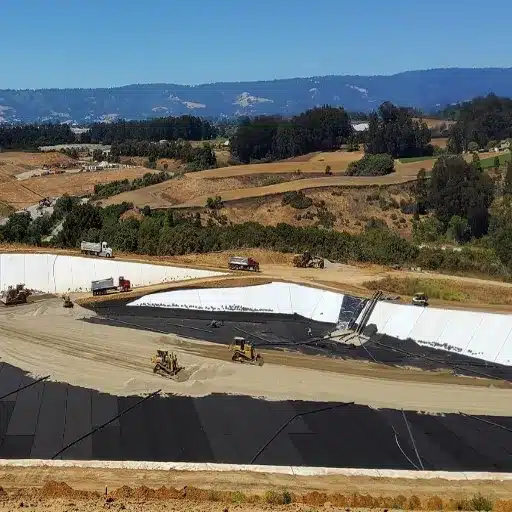
A sodium bentonite liner works because of a mineral property most liners don’t have. The clay swells when it gets wet, and that swelling is the barrier. No pump, no factory seal, just sodium montmorillonite hydrating under load until it forms a gel that water barely crosses.
The complication is that “sodium bentonite liner” names two different products. One is bagged or trucked bentonite clay worked into soil to seal a pond. The other is a factory-made geosynthetic clay liner with the clay encapsulated between geotextiles. Both are called the same thing, and the reason either one seals, plus the conditions under which it quietly stops sealing, is almost never explained. That gap is what this article fills.
You will get a plain definition of a sodium bentonite liner, the swelling mechanism behind it, the self-healing limits the data actually support, the index values specifiers rely on, and the chemistry that degrades the barrier over years. If you specify or buy these liners, the chemistry half is the part worth reading twice.
Not sure which bentonite liner form your project needs? Our engineering team reviews containment conditions and recommends the right product and test documentation. Request a technical quote and we will tell you what your site actually requires.
Key Takeaways
- A sodium bentonite liner seals through hydrated sodium montmorillonite, which swells roughly 700% by weight and 10 to 16 times its dry volume. Calcium bentonite swells far less and is not a sealing material.
- “Sodium bentonite liner” covers two products: a bulk bentonite blanket mixed into soil, and a factory GCL with the clay sandwiched between geotextiles. They are bought and specified differently.
- Self-healing is chemistry-conditional, not a headline feature. With clean water, an untreated and a polymer-modified GCL both fully sealed a 20 mm hole. In 0.6 M calcium chloride, the polymer-modified GCL reached about 76% healing while the untreated GCL healed essentially zero.
- Cation exchange is the slow failure mode. Displacing interlayer sodium with calcium or magnesium can cut cation exchange capacity from about 110 to about 72.5 meq/100 g and raise permeability by two to four orders of magnitude.
- The ASTM index values are how buyers verify performance before purchase: D5890 swell index (≥24 mL/2g), D5891 fluid loss (≤18 mL), D5993 bentonite mass per unit area, and D7503 cation exchange capacity.
What Is a Sodium Bentonite Liner?
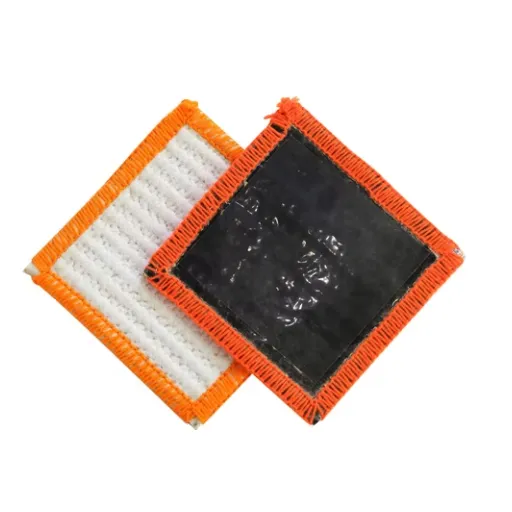
A sodium bentonite liner, sometimes called a sodium bentonite clay liner, is a hydraulic barrier made from sodium bentonite clay, a natural sodium montmorillonite that absorbs water and swells to many times its dry volume. Hydrated and confined, the swollen clay forms a low-permeability gel that blocks water, leachate and most aqueous liquids. It is supplied either as bulk granular clay for mixing into soil or as a prefabricated geosynthetic clay liner.
The word “sodium” is doing real work in that sentence. Sodium bentonite comes from deposits such as the Wyoming and Black Hills sodium montmorillonite beds, and it swells far more than the calcium-dominated bentonite used for other purposes. Sourcing calcium bentonite for a sealing job is a common and expensive mistake.
One Term, Two Products
The two delivery forms behave differently, are installed differently and are priced differently. The table below separates them. This article covers the clay chemistry both forms share; the pond application method belongs to our guide on bentonite liners for ponds and reservoirs.
| Form | What it is | Typical use | Where covered |
|---|---|---|---|
| Bulk or mixed bentonite blanket | Bagged or trucked sodium bentonite clay worked into or spread over soil | Pond, lagoon and canal sealing on small to mid projects | One paragraph here, full method in our pond guide |
| Geosynthetic clay liner (GCL) | Sodium bentonite encapsulated between geotextiles, needle-punched, sometimes bonded to a geomembrane | Landfills, ponds, canals, mining pads, secondary containment | This article |
What a GCL Is Actually Made Of
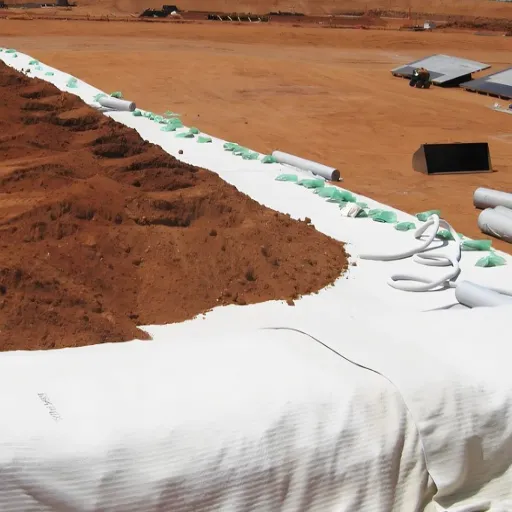
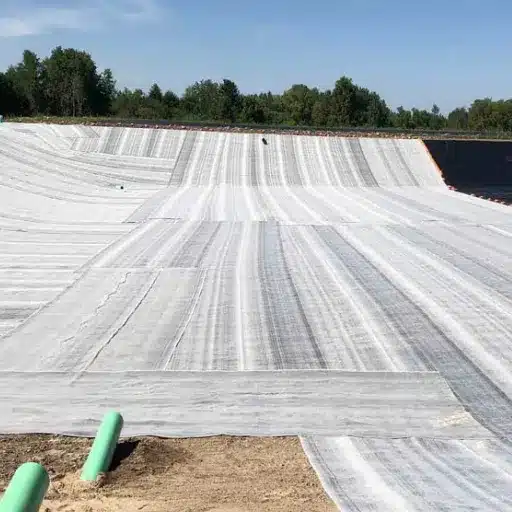
A GCL is sodium bentonite held between two geotextile layers and needled together so the clay stays put. Typical bentonite loading runs about 3.2 to 6.0 kg/m², and the finished roll is roughly 6 to 12 mm thick. That thin layer replaces several hundred millimetres of compacted clay, which is the whole reason GCLs displaced traditional clay liners in containment design. It’s also why the debate over the compacted clay alternative comes down to thickness, cost and chemistry.
The geotextiles carry no water and provide no seal. They hold the clay, protect it and give the roll its tensile strength. All the sealing happens in the bentonite.
How Sodium Bentonite Swells and Seals
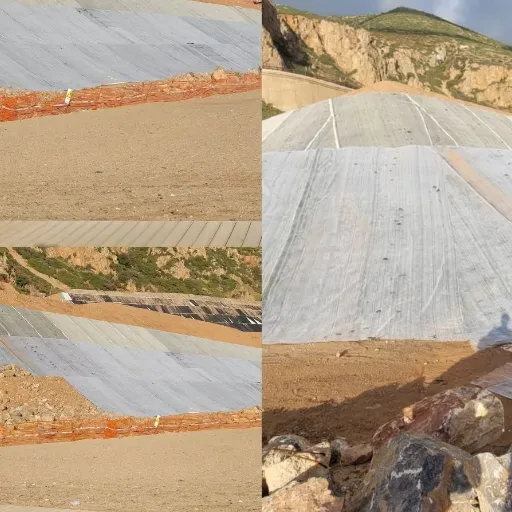
Here is the mechanism, without the textbook register.
Sodium montmorillonite is a 2:1 clay. It has a layered crystal structure with exchangeable sodium ions sitting between the layers. Those sodium ions want to hydrate, and when water reaches the clay, it rushes into the interlayer space and pushes the layers apart. This is the hydration, or diffuse double layer, response. The clay expands from a dry powder into a gel.
How Much It Swells
The numbers are large. Sodium bentonite swells to roughly 700% by weight and about 900% by volume on full hydration, and the commonly cited range is 10 to 16 times its dry volume, with some supplier data reporting up to 15 to 17 times. Present that as a range rather than a single figure, because the exact value depends on confinement, water quality and the specific deposit.
The point is not the precise multiplier. The point is that a clay which does not swell is not a sodium bentonite liner, whatever the label says.
From Powder to Barrier
Under confinement, the swollen clay has nowhere to expand, so it fills its own porosity and forms a dense, low-permeability gel. A quality hydrated GCL reaches a hydraulic conductivity of about 5 × 10⁻⁹ cm/s or better, and high-performance grades go two to three orders of magnitude lower. How those values are measured and what they mean for a specification is the subject of our article on how these values translate to hydraulic conductivity.
Confinement isn’t optional. Swelling pressure needs load. A dry or unconfined bentonite layer isn’t a barrier, and a liner that never gets wet enough during installation is a liability rather than an asset.
Bulk Blanket Versus GCL Hydration
The two forms hydrate differently, and it matters. A factory GCL arrives with uniform, controlled sodium bentonite that hydrates predictably once water reaches it. A field-mixed blanket depends on the contractor blending clay into soil at the right rate and compacting it properly. Under NRCS practice, bulk bentonite for pond sealing is applied at minimums of about 1.0 to 1.5 lb/ft² on clay and sandy silt soils, rising to 2.5 to 3.0 lb/ft² on open rock or gravel, built to at least 6 inches finished thickness and compacted to 90% of Standard Proctor density.
That is the whole treatment this article gives the bulk method. The step-by-step lives in our pond guide.
Self-Healing: What It Can and Cannot Close
Self-healing is the property that sells GCLs, and it is the one most often oversold. The honest version lives in the data.
How Self-Healing Works
When a GCL is punctured, the surrounding hydrated bentonite migrates into the gap. Because the clay is a gel, it flows under the small stresses present in a covered liner and re-seals the void. The larger the hydraulic head pushing water toward the hole, the more aggressively the clay is drawn in. This is genuine and useful, and it is why GCLs tolerate installation damage that would defeat a rigid barrier.
The Number No One Publishes
A study on polymerised sodium bentonite GCLs, published in a peer-reviewed geosynthetics journal, measured self-healing directly, and the result is the sharpest fact on this topic.
When a 20 mm damage hole was created in a GCL and allowed to re-seal in deionised water, both an untreated-bentonite GCL and a polymer-modified GCL healed completely. Change the permeant to a 0.6 M calcium chloride solution and the outcome splits. The polymer-modified GCL reached about 76% healing. The untreated GCL healed essentially zero.
Read that carefully, because it reframes the feature. Self-healing is not a fixed product property. It is a function of the pore-fluid chemistry the liner sits in, and in a calcium-rich or high-ionic-strength solution, untreated sodium bentonite can lose the ability almost entirely. The polymer works because its anionic groups hold the double layer open so the clay still swells when cations load it.
| Permeant | Untreated bentonite GCL | Polymer-modified bentonite GCL |
|---|---|---|
| Deionised water | Full healing of a 20 mm hole | Full healing of a 20 mm hole |
| 0.6 M calcium chloride | Essentially zero healing | About 76% healing |
Why Clean Water Heals and Brine Does Not
Hydrated bentonite moves because its sodium ions carry a diffuse cloud of water molecules that keeps the layers apart. Raise the concentration and valence of the surrounding cations, and the double layer collapses. The clay shrinks, the gel stiffens, and mobility drops. In a brine or a leachate, the clay simply cannot flow into a puncture the way it does in clean water.
The Practical Limits
Field guidance commonly cites self-sealing of penetrations up to roughly 30 mm under clean-water conditions, with repair still required for larger damage. Two things defeat self-healing outright. A dry liner has no gel to migrate, so it cannot heal anything. And coarse, angular rock or sustained root intrusion keep reopening the void faster than the clay can close it. Treat “self-healing” as a design benefit under the right conditions, not a warranty.
Watch: Embed our short walkthrough of a GCL panel deployment and hydration test from the Shanxi Shengxing YouTube channel here.
The Index Values That Define a Sodium Bentonite Liner
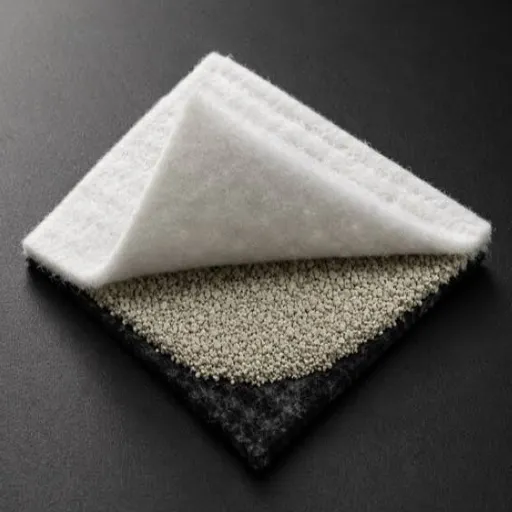
Before a specifier ever trusts a self-healing claim, they check four numbers. These are the ASTM index tests, they are fast and inexpensive, and they describe the clay itself rather than the finished composite.
Swell Index: ASTM D5890
The swell index, tested to ASTM D5890, measures how much a fixed mass of the dry clay mineral swells in a graduated cylinder under a standard procedure. It is the single most important acceptance value for sodium bentonite. GRI-GCL-3 requires a swell index of at least 24 mL/2g, and the NRCS standard for bulk pond-sealing bentonite sets a minimum free swell of 22 mL. A swell index above roughly 20 mL/2g generally indicates a clay that will hold a hydraulic conductivity below 10⁻⁹ m/s.
Calcium bentonite fails this threshold, which is the technical reason “sodium” is written into nearly every bentonite liner specification.
Fluid Loss: ASTM D5891
The fluid loss test measures how much liquid the clay suspension loses through a filter under pressure. A high value signals a clay that does not gel tightly and will not hold a low-permeability seal. GRI-GCL-3 caps it at 18 mL. Rising fluid loss on a production lot is an early warning that the clay is degrading before the permeability test can confirm it.
Mass Per Unit Area: ASTM D5993
This test measures the bentonite loading in the finished GCL, in kg/m² or lb/ft², along with moisture content. More bentonite means less water gets through, and the relationship is measurable. It is also the value that keeps a thin GCL from passing on a technicality.
Cation Exchange Capacity: ASTM D7503
Cation exchange capacity measures the clay’s capacity to hold exchangeable cations, reported in meq/100 g or cmol/kg, which are numerically equivalent. A fresh sodium bentonite sits near 110 meq/100 g. That capacity is what allows the clay to hold its swelling state, and as it falls, the barrier weakens. These four values all feed into a conductivity specification, and the wider range of product forms is set out in our guide to the types of geosynthetic clay liner.
| Property | Test method | Typical / acceptance value | What it tells the buyer |
|---|---|---|---|
| Swell index | ASTM D5890 | ≥ 24 mL/2g (GRI-GCL-3); ≥ 22 mL (NRCS bulk) | Whether the clay is a true sodium bentonite that will swell and seal |
| Fluid loss | ASTM D5891 | ≤ 18 mL | Whether the clay gels tightly enough to form a barrier |
| Bentonite mass per unit area | ASTM D5993 | 3.2 to 6.0 kg/m² typical | How much swelling clay is in the roll, and how much can self-heal |
| Cation exchange capacity | ASTM D7503 | ~110 meq/100 g fresh sodium form | The clay’s reserve capacity to hold its swelling state over time |
When Sodium Bentonite Stops Working: Chemistry and Durability
This is the part of the story supplier datasheets leave out, and it is the part that decides whether a liner lasts decades or fails early. A sodium bentonite liner is a chemical system as much as a physical one.
Cation Exchange
Recall that the sodium ions between the clay layers are what drive the swelling. Those ions are exchangeable, which means other cations in the surrounding pore fluid can take their place. Calcium and magnesium, both divalent and both common in hard water, seawater and many leachates, are strongly preferred by the clay over sodium.
When divalent cations displace the sodium, the double layer collapses and the clay shrinks. Porosity rises, the gel weakens, and the barrier becomes measurably more permeable. Nothing has physically broken. The clay has simply changed chemistry.
The Quantified Consequence
The numbers are stark. Geochemical degradation studies report that interlayer sodium replacement can cut cation exchange capacity from about 110 down to about 72.5 meq/100 g, while pushing permeability up by two to four orders of magnitude from the clean-water baseline. The most aggressive conditions are leachates with a pH below about 3 or above about 11, which attack the clay structure directly. Recent work on low-pH leachate from metal industries confirms that a sodium GCL is stressed hard by these fluids.
This is the same mechanism that raises hydraulic conductivity under aggressive chemistry, and it is why a liner that performs perfectly for years under benign water can fail quickly under the wrong fluid.
RMD: Predicting Whether a Solution Will Degrade the Clay
The monovalent-to-divalent ratio, or RMD, is a practical predictor of chemistry risk. It compares the concentration of sodium and potassium ions to calcium and magnesium ions in the pore fluid. A high RMD, meaning mostly monovalent ions, is friendly to sodium bentonite. As RMD falls, conductivity rises. If you know the RMD of your contained liquid, you have a good first estimate of whether a standard sodium GCL will hold or whether the chemistry will degrade it.
Desiccation and Wet-Dry Cycling
Drying cracks the clay, and ion exchange prevents the cracks from re-sealing. Under seawater wet-dry cycling, untreated bentonite lost its self-healing ability and its conductivity climbed sharply within a few cycles. By the fourth cycle it sat about three orders of magnitude higher than a polymer-treated clay. The untreated clay simply couldn’t re-seal the cracks that drying opened.
Any design that allows wet-dry cycling, such as an exposed cover or a fluctuating reservoir, has to account for this. A continuously hydrated compatibility test won’t predict it.
Gas and the Unhydrated State
One more caveat worth stating plainly: a dry GCL is not a gas barrier. Gas transmission through an unhydrated liner is high, and a GCL only develops gas resistance once the bentonite hydrates. Where gas containment matters, that requirement has to sit alongside the hydraulic one.
Mitigations: Polymer-Modified and Dense-Prehydrated Bentonite
Because untreated sodium bentonite struggles in brines and aggressive leachates, two engineered options exist.
A polymer-modified bentonite (often called PB or HYPER clay) has an anionic polymer such as sodium carboxymethyl cellulose or sodium polyacrylate adsorbed into the clay. The polymer’s negatively charged groups balance the extra cations in the pore fluid, so the double layer stays open and the clay keeps swelling even under cation loading. This is the mechanism behind the 76% self-healing result in calcium chloride. Polymer treatment has also been shown to raise free swell and cut fluid loss substantially compared with unmodified sodium bentonite.
A dense-prehydrated GCL (DPH-GCL) is pre-hydrated under load during manufacture so the clay starts in a dense, swollen state that resists loss of self-healing.
Both options carry trade-offs, mainly polymer elution over the liner’s life and reduced interface shear strength, which is a product-selection question covered in our GCL type guide. The rule of thumb is simple: for clean water, standard sodium bentonite is fine. For aggressive, high-ionic-strength or low-pH fluids, specify a modified bentonite and test it against the actual liquid under ASTM D6766.
Choosing and Sourcing a Sodium Bentonite Liner
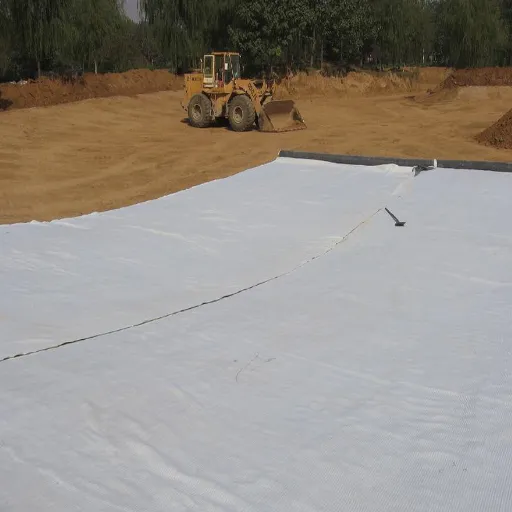
Everything above resolves into a short sourcing checklist.
Sodium Versus Calcium
Always specify sodium bentonite for sealing, and verify it rather than trusting the label. Ask for the D5890 swell index and D5891 fluid loss, and add a D7503 cation exchange capacity test where the contained fluid poses a chemistry risk. A supplier who cannot produce these values cannot support a performance claim.
Match the Form to the Project
Bulk or mixed blanket bentonite suits pond and lagoon sealing on smaller sites with accessible soils and reasonable terrain. A factory GCL suits projects that need consistent, controlled clay loading, faster installation, or a documented index-test trail, and it pairs naturally with a geomembrane where gas or additional security matters. Decide it by project size, available head, terrain and required chemistry.
Documentation to Require From Any Supplier
Before you approve a sodium bentonite liner supplier, request GRI-GCL-3 conformance, ASTM test reports with their test frequencies, the bentonite source and its swell index, a retained-sample commitment, and documented moisture content. That documentation is what separates an engineered barrier from a bag of clay.
When a Sodium Bentonite Liner Is the Wrong Choice
It is the wrong choice against very aggressive chemistry that defeats even modified clay, on arid or unconfined exposures where the clay will desiccate, and on steep slopes where interface shear rather than permeability governs the design. In those cases, a geomembrane or a composite system takes the primary barrier role.
If you want to compare against the traditional alternative directly, our article on the sodium bentonite liner versus compacted clay sets the two side by side on thickness, cost and performance.
Frequently Asked Questions
What is a sodium bentonite liner made of?
It is made from sodium bentonite, a natural sodium montmorillonite clay that swells heavily on hydration. In a geosynthetic clay liner, that clay is encapsulated between two geotextiles and needle-punched together, typically at a loading of 3.2 to 6.0 kg/m². In bulk form, the same clay is supplied loose for mixing into soil.
Is a sodium bentonite liner the same as a GCL?
Not exactly. “Sodium bentonite liner” is an umbrella term covering both bulk granular bentonite clay and a factory-made geosynthetic clay liner. A GCL is one product form of a sodium bentonite liner. The clay chemistry is the same; the delivery, installation and specification are different.
How much does sodium bentonite swell?
Sodium bentonite swells to roughly 700% by weight and about 900% by volume on full hydration, or about 10 to 16 times its dry volume, with some sources reporting up to 15 to 17 times. The exact figure depends on confinement, water chemistry and the specific deposit.
Can a sodium bentonite liner repair itself?
Yes, within limits. Hydrated bentonite migrates into a puncture and re-seals it, and under clean water a 20 mm hole has healed completely in testing. But the ability is chemistry-dependent: in a 0.6 M calcium chloride solution, untreated bentonite healed essentially zero while a polymer-modified clay reached about 76%. A dry liner cannot self-heal at all.
How long does a sodium bentonite liner last?
Bulk bentonite seals last decades when kept wet and covered. GCLs are commonly modelled at 25 to 50 years of service life, and at least one product carries a LAGA assessment indicating more than 100 years. Loss of cover, desiccation or cation exchange from aggressive pore fluid shortens service life sharply, so durability is a chemistry question as much as a materials one.
Conclusion
A sodium bentonite liner is a remarkable barrier built on a simple mineral trick. Sodium montmorillonite hydrates, swells 10 to 16 times its dry volume, and under confinement forms a gel that water can barely cross. That same swelling clay heals small punctures on its own. This is why the material displaced hundreds of millimetres of compacted clay with a few millimetres of bentonite.
But the barrier is chemical as much as physical. Divalent cations, desiccation and wet-dry cycling all degrade it, and the degradation is measurable. Cation exchange capacity can fall from about 110 to about 72.5 meq/100 g while permeability rises two to four orders of magnitude. Self-healing, so often quoted as a headline benefit, can drop from total in clean water to near zero in a calcium chloride solution. Polymer-modified and dense-prehydrated bentonites widen the working range, at the cost of polymer elution and reduced shear strength.
The way to buy with confidence is the four index values. D5890 swell index, D5891 fluid loss, D5993 mass per unit area and D7503 cation exchange capacity tell you whether the clay will swell, seal and hold its performance in your conditions. Require them, read them, and match the liner to your pore-fluid chemistry rather than to a datasheet headline.
Ready to specify a sodium bentonite liner with the documentation to back it? Send us your project conditions and contained-liquid chemistry. Our engineering team will recommend the right bentonite form, flag any chemistry risk, and supply the ASTM test reports you should require from any supplier. Request a technical quote or explore our geomembrane and GCL range before you tender.