Ground protection mats are engineered surface panels that distribute heavy equipment loads across soft or sensitive ground, preventing soil compaction, erosion, and turf damage. For most construction and infrastructure projects, HDPE ground protection mats offer the best balance of load capacity, portability, and long-term reuse value.
The global ground protection mats market is valued at approximately USD $700 million to $2.2 billion in 2026. It is growing at a 5–9% CAGR as infrastructure investment accelerates worldwide. Yet engineering buyers still face a persistent problem. Most selection guides are written for U.S. domestic contractors, not for international project managers who need export-ready site access mats, certified quality, and cross-border logistics support.
This guide solves that gap. You will learn how to select the right mat type, thickness, and connection system for your specific terrain and equipment. You will also understand what separates a commodity supplier from an engineering partner who can support your project from specification through delivery.
Key Takeaways
- HDPE ground protection mats support 60–120 tons and offer the best cost-per-use over a 10-year lifecycle.
- Match mat thickness to equipment load and ground firmness: 10 mm for pedestrian use, 15 mm for general construction, 20 mm+ for cranes and tracked equipment.
- Total weight matters, but point load (outrigger pressure) often dictates mat selection for cranes and drilling rigs.
- International buyers should verify ISO9001 certification, sample retention protocols, and container-loading efficiency before placing orders.
- Quality HDPE mats deliver 10+ years of reuse with minimal maintenance, while timber mats require frequent replacement due to moisture absorption.
What Are Ground Protection Mats and Why Do Projects Need Them?
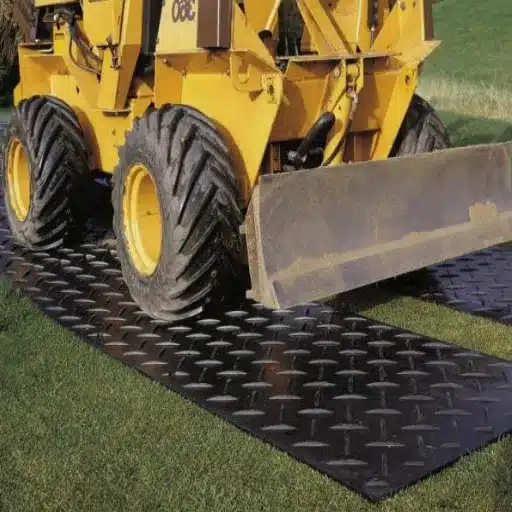
Ground protection mats are rigid or semi-rigid panels placed over soil, turf, or unstable surfaces to create a temporary stable platform for vehicles, machinery, and personnel. They distribute concentrated loads across a wider area, reducing ground pressure and preventing subsurface damage.
In practical terms, these mats serve three core functions on a job site:
- Load distribution. A 40-ton excavator exerts immense pressure through its tracks or tires. Without mats, that pressure concentrates on small contact patches, causing rutting, soil compaction, and structural damage to underground utilities.
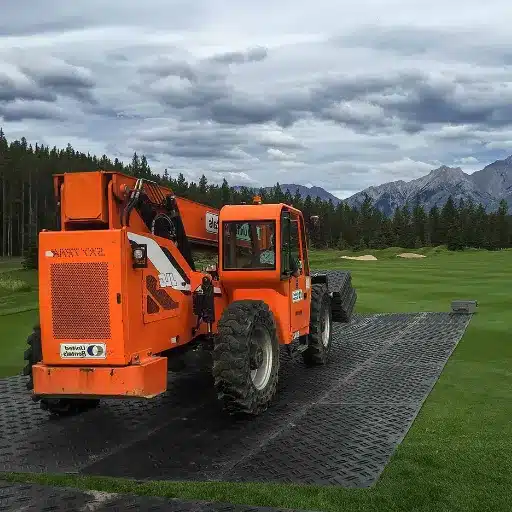
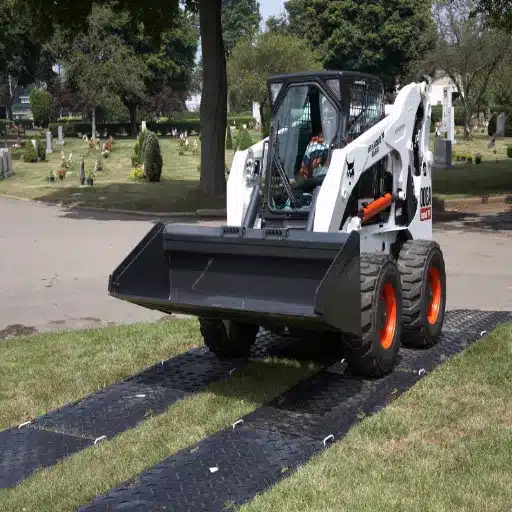
- Soil and turf protection. Environmental contractors use mats to preserve sensitive ground during remediation work. Event organizers deploy them to protect grass venues from vehicle and foot traffic.
- Site access and safety. Temporary roadway mats create all-weather haul roads across muddy or uneven terrain, keeping projects on schedule and reducing accident risk.
Industries that rely on ground protection mats include civil construction, oil and gas, utilities, mining, environmental remediation, and outdoor events. Regulatory drivers also matter: many jurisdictions now require soil protection plans as a condition of project approval, especially near wetlands, heritage sites, or agricultural land.
In 2024, a project manager named Elias was overseeing a highway expansion in Southeast Asia. His team needed to move 50-ton concrete segments across a stretch of soft clay that became impassable after every rainstorm. They initially tried laying crushed stone, but the aggregate sank into the mud and contaminated the surrounding soil. After switching to 20 mm HDPE ground protection mats with an interlocking pin system, Elias’s crew built a 200-meter temporary access road in one day. The mats stayed level through three weeks of monsoon rains. The project avoided a six-figure soil remediation bill. When the job finished, the mats were pressure-washed, stacked, and shipped to the next site.
Types of Ground Protection Mats: An Engineering Comparison
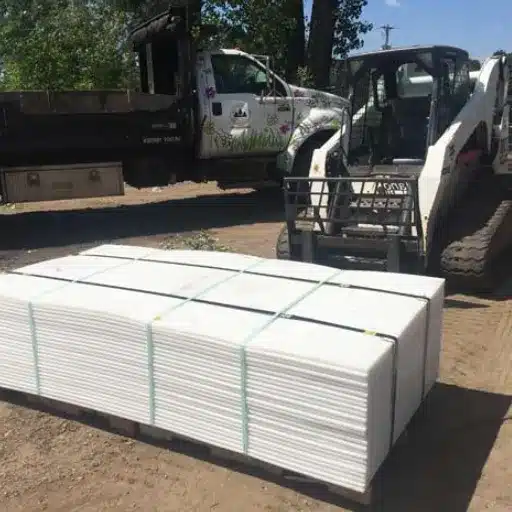
Not all ground protection mats perform the same way. Material composition determines load capacity, weight, durability, and suitability for specific applications. Here is how the four main categories compare from an engineering standpoint.
HDPE Ground Protection Mats
High-density polyethylene (HDPE) mats dominate the market for good reason. They combine moderate weight with high strength, chemical resistance, and UV stability.
- Load capacity: 60–120 tons, depending on thickness and ground firmness
- Weight: Typically 32–45 kg per 4×8 ft panel, allowing two workers to position them manually
- Key properties: Non-absorbent, recyclable, resistant to oils, fuels, and most industrial chemicals
- Best applications: Construction access roads, utility work, event flooring, excavator mats, frequent repositioning
HDPE mats are the default choice for projects that need portability and reuse. A single 20 mm HDPE panel can withstand repeated loading from tracked excavators and dump trucks without deformation. For detailed specifications and load capacity data, see our HDPE ground protection mats technical guide.
Multi-Material Composite Mats
Composite mats use fiberglass-reinforced plastics, wood-plastic blends, or layered engineered materials. They trade portability for extreme load capacity.
- Load capacity: 600+ psi surface pressure, suitable for the heaviest industrial equipment
- Weight: 100–150 kg per panel, requiring machinery for placement
- Key properties: Rigid structure with overlapping flanges and locking pin systems
- Best applications: Oil and gas drilling platforms, crane pads, semi-permanent work platforms
Composite mats excel where load concentration is extreme, and mat movement is minimal. They are less practical for projects that require frequent reconfiguration.
Timber and Crane Mats
Traditional hardwood mats remain common in marshy terrain and crane operations.
- Load capacity: Very high on firm ground, but performance degrades on soft or saturated soils
- Weight: Heavy, with significant moisture absorption over time
- Key limitations: Rot, warping, and insect damage reduce lifespan; not recyclable
- Best applications: Temporary crane outrigger pads, marsh access where extreme ground deformation occurs, bog mats for wetland crossings
Timber mats have a lower upfront cost, but their lifespan is typically 2–5 years versus 10+ years for HDPE.
Rubber and Specialty Mats
Rubber mats prioritize traction and cushioning over load distribution.
- Load capacity: Light to medium duty (pedestrian, small vehicles)
- Key properties: Noise reduction, anti-slip surface, flexibility
- Best applications: Pedestrian walkways, golf courses, landscaping, light event use
These mats fill niche roles but are not suitable for heavy construction equipment.
Comparison Summary
| Property | HDPE | Composite | Timber | Rubber |
|---|---|---|---|---|
| Load capacity | 60–120 tons | 600+ psi | High (variable) | Light duty |
| Weight per 4×8 panel | 32–45 kg | 100–150 kg | 80–120 kg | 20–35 kg |
| Lifespan | 10+ years | 10+ years | 2–5 years | 5–8 years |
| Chemical resistance | Excellent | Good | Poor | Good |
| Recyclability | Yes | Partial | No | Yes |
| Best use case | General construction | Heavy industrial | Marsh/crane pads | Pedestrian/events |
How to Choose Ground Protection Mats: 5 Technical Criteria
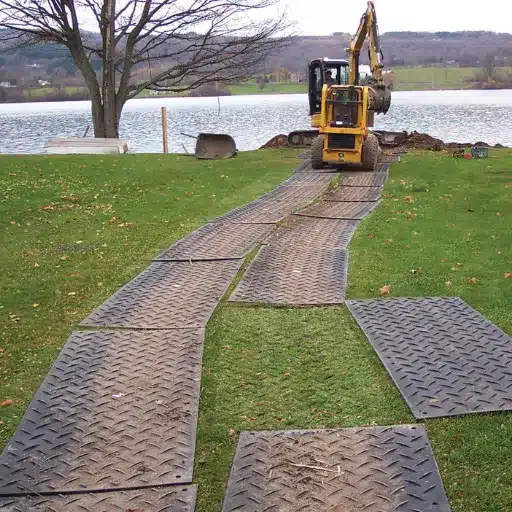
Selecting the right ground protection mat requires more than matching equipment weight to a load rating. Ground conditions, project duration, and connection requirements all influence performance. Use these five criteria to specify the correct product, or read our complete guide on how to choose ground protection mats for an expanded decision framework.
1. Assess Equipment Type and Load
Start with the heaviest piece of equipment that will cross the mats. Note both the total weight and the point load. Heavy equipment ground protection requires matching the mat to the specific load profile of your machinery.
- Rubber-tired vehicles (dump trucks, concrete mixers) distribute weight relatively evenly. Standard 15–20 mm HDPE mats handle most scenarios.
- Tracked equipment (excavators, dozers) concentrates load through narrow track pads. Use 20 mm HDPE or composite mats on soft ground.
- Crane outriggers and drilling rigs create extreme point loads. A 100-ton crane might exert 50+ tons through a single outrigger pad. This often requires 20 mm HDPE with additional sub-base preparation, or composite mats for semi-permanent installations.
Total weight tells part of the story. Point load tells the rest. For a full equipment-specific load analysis, see our ground protection mats for heavy equipment guide.
2. Evaluate Ground Conditions
Ground firmness directly affects mat performance. A mat rated for 80 tons on firm soil may only support 40 tons on saturated clay.
- Firm turf or compacted soil: Most HDPE mats perform at full rated capacity
- Sandy or granular soils: Good drainage but potential for settlement; monitor edge deformation
- Clay or silty soils: High moisture retention; soft ground reduces effective load capacity by 30–50%
- Wetland or swamp: Requires the thickest mats plus possible geotextile or geogrid sub-base for stabilization
Slope also matters. Mats on grades steeper than 5% should be anchored with stakes or securing pins to prevent sliding.
3. Match Thickness to Application
Thickness is the most frequently searched specification for ground protection mats. The right thickness depends on equipment weight, ground firmness, and duration of use.
| Thickness | Typical Duty | Equipment | Ground Condition |
|---|---|---|---|
| 10 mm (3/8 in) | Light duty | Pedestrians, light vehicles, events | Firm turf, paved surfaces |
| 15 mm (5/8 in) | Medium duty | Vans, light trucks, and general construction | Firm to moderately soft soil |
| 20 mm (3/4 in) | Heavy duty | Excavators, dump trucks, tracked equipment | Soft clay, uneven terrain |
| 25 mm+ (1 in+) | Extreme duty | Cranes, heavy drilling rigs, and mining equipment | Very soft or saturated ground |
The 20 mm thickness segment holds approximately 36.8% of the global market share, reflecting its versatility across construction and industrial applications. For a complete thickness-by-equipment breakdown, see our ground protection mat thickness guide.
4. Determine Duration and Portability Needs
How long will the mats stay in place? How often will crews move them?
- Short-term projects (days to weeks): Lightweight HDPE mats reduce labor costs and allow rapid reconfiguration
- Long-term installations (months to years): Heavier composite mats may justify their handling cost through extreme durability
- Rental vs. purchase: The 2026 market shows a clear shift toward rental fleet models for temporary projects. For projects exceeding 12 months, purchase typically delivers a lower cost-per-use. For shorter durations, rental eliminates storage and maintenance obligations.
Portability affects labor budgets. Two workers can hand-carry and position a 4×8 ft HDPE mat. Composite and timber mats require forklifts or cranes, adding equipment rental costs to every move.
5. Connection and Layout Planning
Individual mats must connect securely to form a continuous working surface.
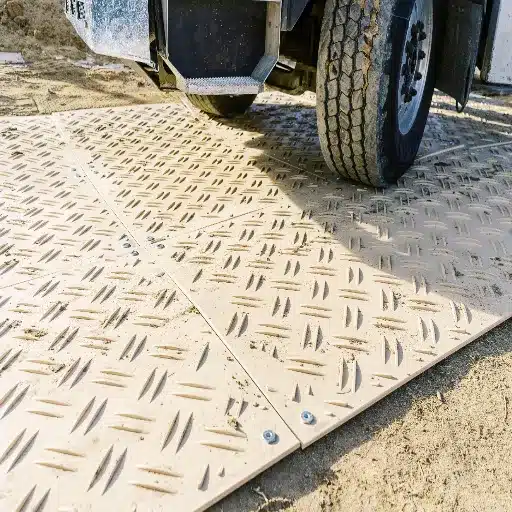
- Interlocking edges: Most HDPE mats feature tongue-and-groove or overlapping flange designs that prevent vertical displacement between panels
- Pin systems: Metal or composite pins lock adjacent mats together, critical for turning areas and slopes
- Standard layouts: 4×8 ft panels are the industry standard; 2×8 ft panels create narrower access lanes or pedestrian paths
- Turning radius: Plan mat layouts with adequate radius for the largest vehicle; tight turns concentrate shear forces at panel joints
A civil engineer named Priya learned this lesson on a utilities project in East Africa. She specified 15 mm HDPE mats for a 300-meter trenching operation but omitted connection pins to save cost. After the first heavy rain, individual mats shifted under tracked equipment. Gaps formed between panels and trapped excavator tracks. Work halted for two days. Adding locking pins and overlapping the edges by 100 mm solved the problem permanently. The delay cost more than the pins would have.
Ground Protection Mats by Application
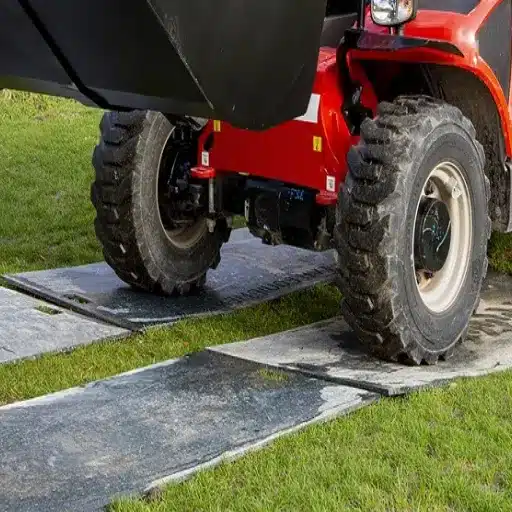
Different industries impose different demands on temporary ground protection. Here is how mat selection varies by application.
Construction Site Access Roads
Construction sites need durable haul roads that withstand repeated passes by loaded trucks and heavy machinery. HDPE mats in 15–20 mm thickness are the standard choice. They resist puncture from debris, handle dynamic loads from braking and turning, and can be repositioned as the site evolves. For a full site-specific application breakdown, see our ground protection mats for construction sites guide.
Environmental Remediation
Environmental contractors work on sensitive ground where soil contamination or compaction would violate permits. HDPE mats create a clean, stable working platform that prevents mixing of contaminated and clean soil. After remediation, mats are removed, and the site restores quickly. Learn more about the environmental benefits of HDPE ground protection mats in remediation and sensitive-site applications.
Oil and Gas Work Platforms
Drilling and completions operations require semi-permanent platforms that support extremely concentrated loads. Composite mats with 600+ psi capacity are the norm. These installations often remain in place for months, justifying the higher handling cost.
Events and Pedestrian Walkways
Outdoor festivals, stadium events, and film productions need lightweight flooring that protects turf from thousands of attendees. 10–12 mm HDPE mats or rubber event matting work well. Rapid installation and removal are essential, since venues often allow only 24–48 hours for setup and breakdown.
Temporary Roadways on Soft Ground
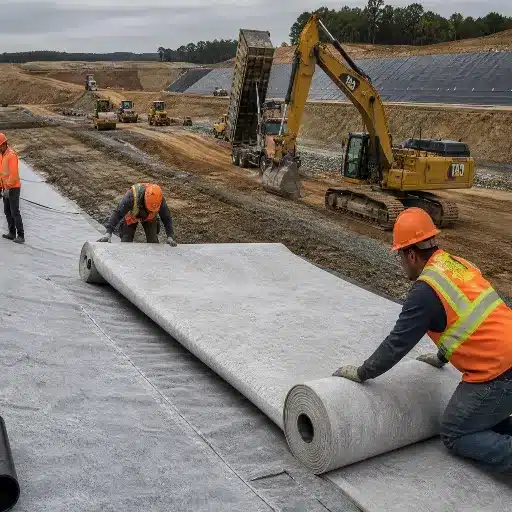
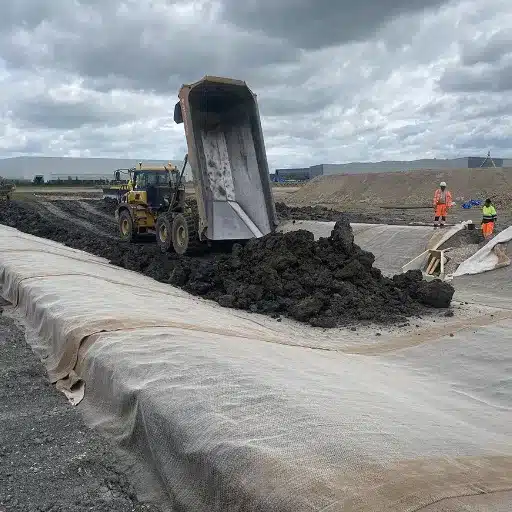
Building a temporary haul road across marsh, wetland, or recently graded fill requires more than surface mats. A proper temporary roadway system combines geotextile separation fabric at the subgrade, followed by 20 mm HDPE temporary roadway mats with full pin connection. This layered approach prevents subgrade pumping and maintains traction even under continuous heavy truck traffic. For layout planning and soft-ground techniques, see our temporary roadway mats guide.
Ground Protection Mat Installation Best Practices
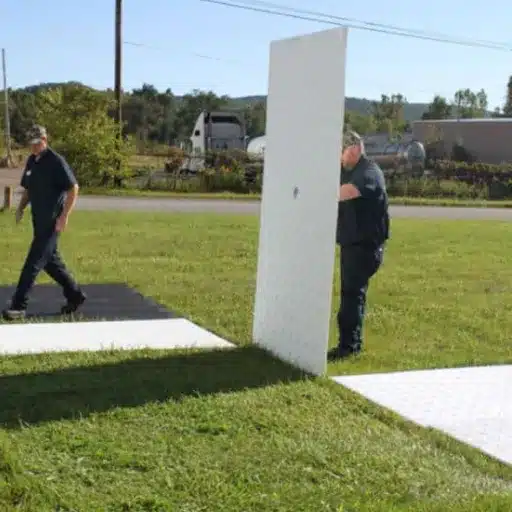
Even the right mats underperform if installed incorrectly. Proper ground protection mat installation ensures maximum load distribution, crew safety, and mat longevity. Follow these practices to get the best performance from your temporary roadway system. For a step-by-step installation walkthrough, see our ground protection mat installation guide.
Pre-Installation Site Assessment
Walk the route and document ground conditions, slopes, drainage patterns, and overhead obstacles. Remove large rocks, stumps, or debris that could puncture mats or create trip hazards. Soft or uneven areas may need grading or a geotextile sub-layer before mat placement.
Layout and Connection
Lay mats in the direction of primary traffic flow. Overlap edges by 50–100 mm to prevent gaps. Install connection pins at every joint, especially on slopes and in turning areas. For curved paths, use narrower 2×8 ft panels or cut standard panels to follow the radius.
Securing on Slopes
On grades exceeding 5%, anchor mats with ground stakes or securing bars at the uphill edge. Without anchoring, mats can slide under braking or downhill traffic, creating dangerous gaps.
Cleaning and Storage
Remove mud, debris, and chemical contamination before lifting mats. Pressure washing is the most effective method. Dry mats completely before flat stacking to prevent warping. Store stacks on level ground with dunnage to allow drainage. HDPE mats tolerate temperatures from -40°C to +60°C without degradation, making them suitable for arctic and tropical deployments. Properly maintained HDPE mats last 10+ years and retain 80–90% of their resale value.
Installation Checklist
Use this quick checklist before every ground protection mat installation:
- Clear the route of rocks, stumps, and debris
- Grade soft or uneven areas and lay geotextile if needed
- Place mats in the direction of primary traffic flow
- Overlap edges by 50–100 mm at every joint
- Install connection pins at all joints, especially on slopes and curves
- Anchor uphill edges with stakes on grades over 5%
- Verify turning radius clearance for the largest vehicle
- Pressure wash and dry mats before storage
Global Sourcing and Quality Assurance Considerations
For international buyers, mat selection extends beyond specifications to supplier capability. An engineering-grade supplier delivers consistent quality, reliable logistics, and project-specific support.
What to Verify in a Supplier
- Quality management system: ISO9001 certification demonstrates systematic process control. Ask for the certificate number and verify its validity.
- Sample retention: Reputable manufacturers retain production samples for 3–5 years, enabling traceability if performance questions arise.
- Testing protocols: Request tensile strength, impact resistance, and load-bearing test data for the specific mat thickness you need.
- Export experience: Suppliers with established freight forwarding relationships understand container loading optimization, customs documentation, and incoterms.
Export Packaging and Logistics
Container space drives shipping cost per mat. A supplier who designs packaging around standard container dimensions (20 ft and 40 ft) reduces freight expense by 15–25% compared to poorly optimized loads. A typical 40 ft container holds 180–220 HDPE mats, depending on thickness, while poor stacking can cut that by 30%. For large projects, verify that the supplier can schedule production to meet phased delivery timelines.
Technical Consultation
The best suppliers function as engineering partners, not just vendors. They should offer load calculations, layout recommendations, and connection system guidance based on your project drawings. This support is especially valuable for first-time buyers or projects with unusual terrain or equipment.
Need export-ready ground protection mats with certified quality and technical support? Contact our engineering team for a customized quotation and project-specific recommendations.
Total Cost of Ownership: Beyond the Purchase Price
Purchase price is a poor metric for comparing ground protection mats. A 10-year total cost of ownership (TCO) analysis reveals the true economic picture. For a detailed cost breakdown by material, see our ground protection mats TCO analysis.
TCO Components
- Initial purchase or rental cost
- Transport and handling: Freight to site, forklift or crane rental for placement, labor for installation and removal
- Cleaning and maintenance: Pressure washing, inspection for damage, and repair of connection points
- Replacement frequency: Timber mats may need replacement every 2–3 years; HDPE mats last 10+ years
- Disposal or resale value: HDPE mats retain 80–90% resale value; timber mats incur disposal costs
TCO Comparison Over 10 Years
| Cost Factor | HDPE Mats | Composite Mats | Timber Mats |
|---|---|---|---|
| Initial cost (per mat) | Moderate | High | Low |
| Transport cost | Low (lightweight) | High (heavy) | High (heavy, moisture gain) |
| Handling labor | Low (manual carry) | High (machine required) | High (machine required) |
| Cleaning cost | Low (pressure wash) | Low (pressure wash) | High (rot/mold removal) |
| Replacement cycle | 10+ years | 10+ years | 2–5 years |
| Resale value | 80–90% | 60–70% | Near zero |
| 10-year TCO (indexed) | 100 (baseline) | 140–180 | 150–220 |
HDPE mats typically deliver the lowest 10-year TCO for general construction and infrastructure projects. Composite mats justify their premium only where extreme load capacity is non-negotiable. Timber mats appear cheap initially, but become the most expensive option over a multi-year project cycle.
A procurement director named Viktor ran the numbers for a mining operation in Eastern Europe. His team needed 500 mats for a three-year open-pit expansion. Timber mats cost 30% less upfront, but Viktor factored in replacement at year three, higher transport weight, and disposal fees. HDPE mats showed a 22% lower total cost over the project life, plus the ability to resell the fleet afterward. The environmental benefit, avoiding the disposal of 500 rotting timber panels, was an additional factor in the final decision.
Frequently Asked Questions
What are ground protection mats made of?
Ground protection mats are manufactured from HDPE (high-density polyethylene), composite fiberglass-reinforced plastics, hardwood timber, or rubber compounds. HDPE is the most common material due to its strength-to-weight ratio, chemical resistance, and recyclability.
How long do ground protection mats last?
Quality HDPE and composite mats last 10 or more years with proper maintenance. Timber mats typically last 2–5 years, depending on moisture exposure and handling frequency.
How much weight can a ground protection mat bear?
Standard HDPE mats support 60–120 tons depending on thickness and ground firmness, according to industry load tests. Composite mats can withstand 600+ psi surface pressure. Always derate capacity by 30–50% on soft or saturated soils.
Can ground protection mats be used on grass or uneven surfaces?
Yes. HDPE mats conform to moderate surface irregularities and protect turf from compaction. For very uneven terrain, composite mats with rigid overlapping flanges provide a more stable platform.
Are ground protection mats environmentally friendly?
HDPE mats are 100% recyclable and reusable for decades, making them more sustainable than timber mats that require logging and frequent replacement. They also prevent soil compaction and erosion, reducing site restoration costs.
What size ground protection mats are standard?
The industry standard is 4×8 ft (1.2×2.4 m). Narrower 2×8 ft panels are available for pedestrian paths and tight access lanes. Custom sizes are available from some manufacturers for specialized applications.
Do ground protection mats require special installation?
Basic installation requires clearing debris, laying mats in the traffic direction, and connecting adjacent panels with locking pins. Slopes steeper than 5% require anchoring with stakes or securing bars. Most crews can install a standard access road without specialized training.
What warranty should I expect on ground protection mats?
Quality HDPE mat manufacturers typically offer warranties ranging from 3 to 10 years against material defects and excessive wear under normal use. Verify warranty terms before purchase, including coverage for connection points and load-bearing integrity. A supplier who stands behind their product with a written guarantee signals confidence in their manufacturing process.
How do ground protection mats compare to plywood?
Plywood is a false economy for heavy equipment ground protection. Standard plywood sheets absorb moisture, delaminate under load, and splinter within days on a construction site. HDPE mats cost more upfront but last 10+ years, resist chemicals, and retain resale value. For any project exceeding two weeks or involving machinery over 5 tons, HDPE ground protection mats are the more cost-effective choice.
Can ground protection mats be used in cold weather?
Yes. HDPE ground protection mats perform reliably in temperatures from -40°C to +60°C. The material remains flexible in freezing conditions and does not become brittle. In snow and ice, textured surfaces provide traction for tracked and rubber-tired equipment. Composite mats also handle extreme cold but may require more effort to position if frost-heaved.
Conclusion
Ground protection mats are essential infrastructure for modern construction, environmental, and industrial projects. The right selection depends on five technical criteria: equipment load, ground conditions, mat thickness, project duration, and connection requirements.
HDPE ground protection mats remain the most versatile choice for international infrastructure buyers. They combine high load capacity, low handling cost, and the best 10-year total cost of ownership. For projects involving extreme point loads or semi-permanent installations, composite mats provide the necessary performance at a higher handling cost.
The difference between a commodity purchase and an engineering partnership lies in what happens after the quote. Look for suppliers who offer ISO9001-certified manufacturing, retained samples for traceability, export-optimized logistics, and technical consultation for project-specific challenges.
Ready to specify ground protection mats for your next project? Request a technical quote from our engineering team. We provide load calculations, layout recommendations, and customized product specifications for construction and infrastructure projects worldwide.