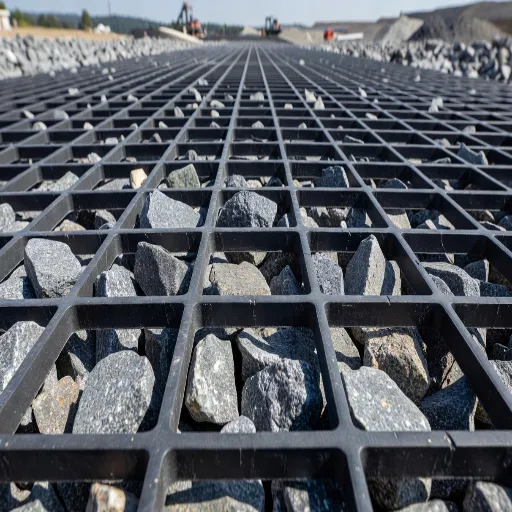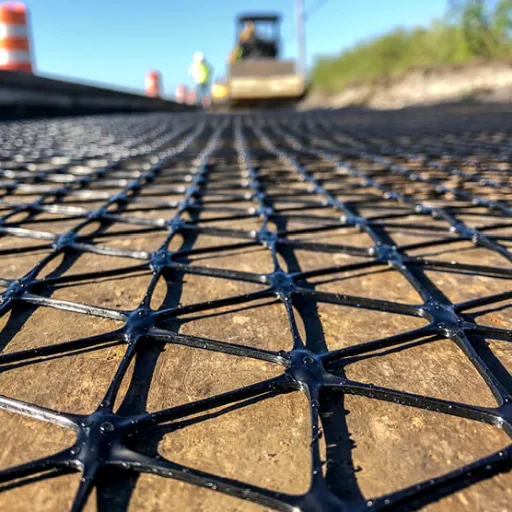
Geogrid cost per square meter typically runs $0.15 to $0.90 ex-works for a standard polypropylene biaxial grid, $0.30 to $2.00 for uniaxial PP or HDPE, and $0.30 to $3.60 for high-strength polyester, with specialty grids above $4.60. Material price is only the start, because the delivered and installed cost is usually several times the raw per-meter figure once freight, aggregate cover, and labor are added.
Dana, a procurement engineer at a mid-sized paving contractor, learned this the hard way last spring. She had two quotes on her desk for “biaxial geogrid,” one at $0.28 per m² and one at $0.86. Both were legitimate. The first was a light 15-15 polypropylene grid built for a gravel walkway. The second was a 40-40 grade with high junction efficiency and third-party test data, designed to carry loaded dump trucks over soft fill. Comparing them by price alone was like comparing a bicycle to a dump truck by asking which is cheaper.
This guide gives you the numbers competitors leave out. You will learn realistic geogrid cost per square meter by type, polymer, and strength class, how much freight, installation, and aggregate add to the total, how to buy at the right volume, and how to decide whether a geogrid is worth it at all. The prices are indicative 2026 ex-works bands collected across manufacturers and marketplaces, so treat them as a budgeting starting point rather than a fixed quote.
Key Takeaways
- Standard PP biaxial geogrid runs about $0.15 to $0.90 per m² ex-works; high-strength uniaxial, PET, and composite grids range $0.30 to $4.60+ per m².
- Material is usually the minority of total project cost; add freight, aggregate cover, site prep, and labor to get the real number.
- Compare quotes on identical specifications (polymer, strength grade, test method) and on the same trade term, EXW, FOB, or CIF.
- Container freight swings the delivered cost per m² dramatically, because a 40-foot container holds roughly 53,000 m² of light biaxial grid but only ~17,800 m² of a heavy 40-40 grade.
- On weak subgrades, a geogrid can cut aggregate base thickness 20-50%, which often pays for the material several times over.
How Much Does Geogrid Cost Per Square Meter?
Geogrid cost per square meter depends almost entirely on the specification, and typical material-only bands are shown below. A standard polypropylene biaxial grid for road bases and driveways is the entry point, while uniaxial and polyester grids for walls and slopes cost more because they carry far more tensile load.
| Geogrid type | Typical strength | Indicative cost per m² (EXW) |
|---|---|---|
| PP biaxial (standard) | 15-15 to 40-40 kN/m | $0.15 – $0.90 |
| PP biaxial heavy / triaxial | 50 kN/m and above | $0.90 – $2.50 |
| PP uniaxial | 60-200 kN/m | $0.30 – $2.00 |
| HDPE uniaxial / biaxial | 20-300 kN/m | $0.40 – $2.50 |
| Polyester (PET) warp-knitted | 40-800 kN/m | $0.30 – $3.60 |
| Fiberglass / asphalt grid | Crack control | $0.30 – $2.00 |
| High-strength / composite | 200+ kN/m | $3.50 – $4.60+ |
These bands align with the general market guides. Industry cost references place geogrid material anywhere from $0.20 to $3.00 per m² (Tinhy) up to $0.50 to $7.00 per m² depending on how wide a net they cast. The wide spread is the point: “geogrid” is not one product, and any supplier who quotes a firm per-m² price before asking your grade is quoting a different product.
Per Square Foot and Per Square Yard
Because buyers sit in different markets, convert units before comparing. One square meter equals about 10.76 square feet or 1.196 square yards. So a grid at $0.50 per m² is roughly $0.05 per sq ft or $0.42 per sq yd. North American retail listings for premium-brand rolls run far higher, often $0.32 to $1.52 per sq ft (about $3.40 to $16 per m²), because you are buying a single project roll from a distributor rather than a container from a factory. We return to that retail-versus-manufacturer gap below.
Geogrid Cost by Type and Polymer
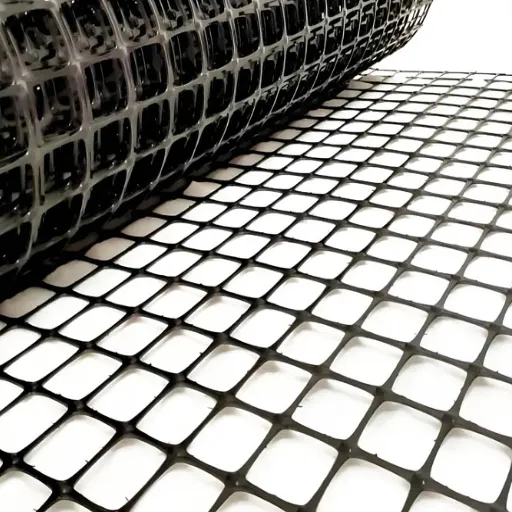
The three structural families exist for a reason, and each has its own price curve. If you need the full foundation on how geogrids work and where each type belongs before you start comparing costs, our complete geogrid stabilization guide walks through types, soil mechanics, and design basics from the ground up.
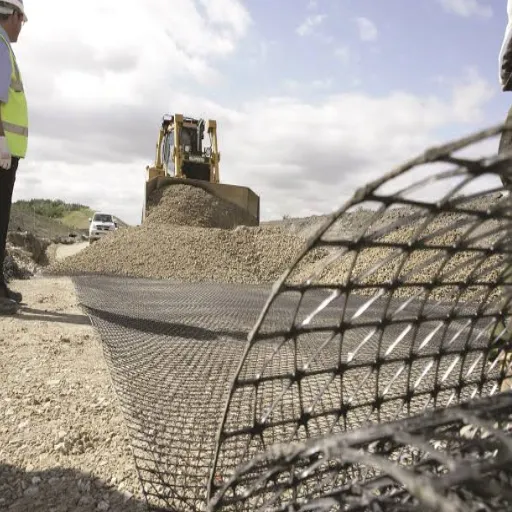
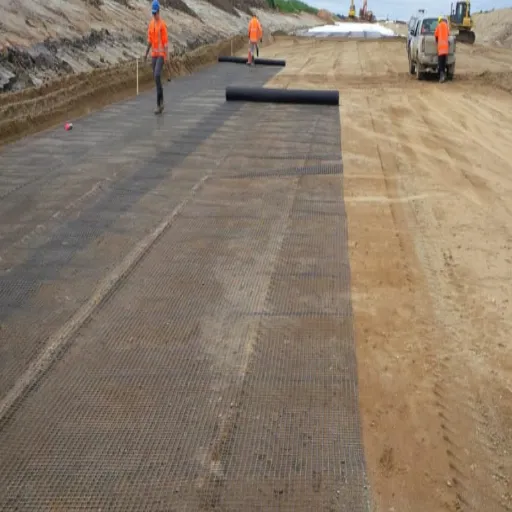
Biaxial geogrid is the workhorse for road bases, driveways, and subgrade stabilization. Strength is roughly equal in two directions, and this is the cheapest per m² because the grid is light and polypropylene is the base-case polymer. A full treatment of when a geogrid for road base and driveway stabilization earns its keep is worth reading if that is your application.
Uniaxial geogrid carries high strength in one direction and is built for retaining walls, steep slopes, and mechanically stabilized earth. Because it must hold sustained tensile load for the design life, it uses more polymer and tighter quality control, which pushes the price up. Within a polymer, cost scales close to proportionally with strength: more kN/m means more material in every rib.
Triaxial geogrid spreads load in three directions and costs more per m² than a comparable biaxial grid, which is justified on heavy haul roads and very weak subgrades where the improved load distribution cuts aggregate the most.
Polymer also matters beyond geometry. Polypropylene is the low-cost baseline. High-density polyethylene costs more where documented creep and durability data are required. Warp-knitted polyester costs more per kN but reaches very high strengths with a long-term design strength you can actually design to. Our geogrid specifications guide explains how to read tensile strength, junction efficiency, and aperture data so you are not buying on the kN/m label alone.
Geogrid Cost by Strength Class
Within any polymer, the strength grade is the dominant cost driver. The table below maps typical classes to their usual applications.
| Strength class | Typical use | Relative material cost |
|---|---|---|
| 15-30 kN/m | Driveways, light roads, walkways | $ |
| 30-60 kN/m | Roads, parking areas, subgrade stabilization | $$ |
| 60-120 kN/m | Retaining walls, slopes, MSE | $$$ |
| 120-200+ kN/m | Heavy walls, steep slopes, heavy haul | $$$$ |
The trap is over-specification. When a developer in Tennessee specified a 200 kN/m uniaxial grid for a gravel driveway that only needed a 30 kN/m biaxial, he paid roughly three times the necessary material cost for a product whose extra strength did nothing in that application. A driveway does not impose wall-grade tensile loads. If you are unsure which class fits, our how to choose a geogrid framework walks through the decision from soil type and load to the final specification.
Geogrid Cost by Application
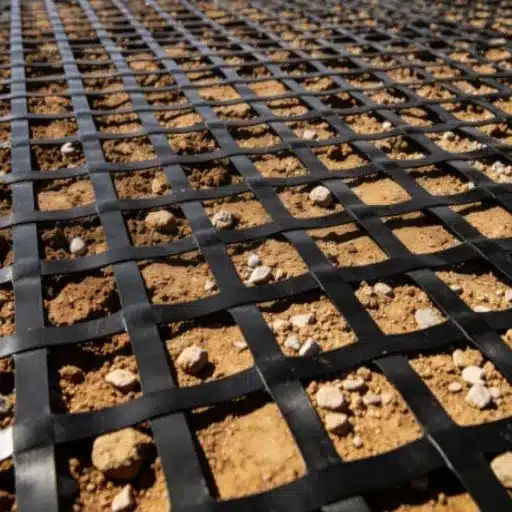
Application drives both specification and total cost. A residential driveway might need 2,000 m² of light biaxial grid laid over firm ground. A municipal road or MSE wall project can consume 50,000 m² of higher-grade material plus a geotextile separator on soft subgrades. Rough cost framing by application:
- Gravel driveway or parking area. Light biaxial PP, 15-30 kN/m, the lowest cost per m², often bought at retail scale.
- Road base. Biaxial (or triaxial for heavy traffic), 30-60 kN/m, where aggregate savings justify the grid.
- Retaining wall / MSE. Uniaxial or PET, 60-200+ kN/m, the highest cost per m² because long-term tensile design is required.
- Asphalt overlay. Fiberglass or composite grids for crack control, a separate and specialized product line.
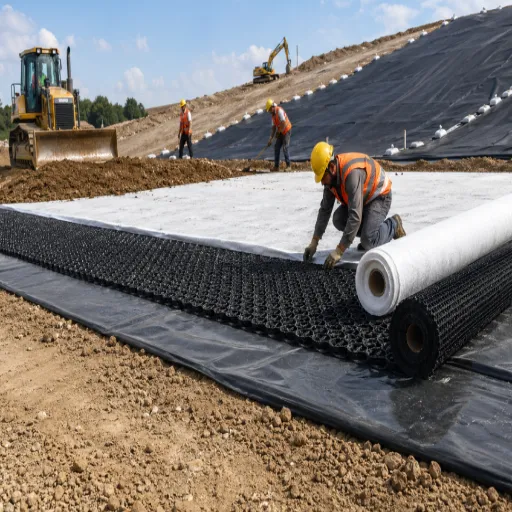
For the whole-system comparison between a grid and a 3D geocell, or between a grid and a plain geotextile, those dedicated comparison guides are the better resource. The geogrid soil reinforcement guide also explains when reinforcement is genuinely needed versus when a separation fabric alone is enough, which stops you spending on a product the project never required.
Material Cost vs Installed Cost
Raw material is usually the minority of a geogrid project’s total cost. Installed cost adds subgrade grading, aggregate cover, compaction, placement labor, overlaps, drainage, and quality control. On complex sites those items dwarf the grid itself.
DOT bid data collected by the ASCE Geo-Institute give the clearest picture of in-place cost. On large pavement jobs measured in square yards, geosynthetic reinforcement pay items ran roughly $1.00 to $5.00 per sq yd (about $1.20 to $6.00 per m²) for material plus installation, with Arizona base reinforcement averaging about $1.79 to $2.22 per sq yd and an Ohio geogrid reinforcement item averaging $3.44 per sq yd. Notably, the same source found that labor and equipment for placement are minimal on flat, large-scale work; the material itself dominates the in-place price. On steep slopes, confined sites, and jobs requiring deep aggregate haulage, labor rises sharply.
This is why the cheapest grid is not automatically the cheapest project. If a light grid fails to interlock with your stone or ruts in the first season, the rework costs many times the few cents per m² you saved. The geogrid installation guide covers the placement, overlap, and cover rules that protect your investment on day one.
Order Volume, MOQ, and Bulk Pricing
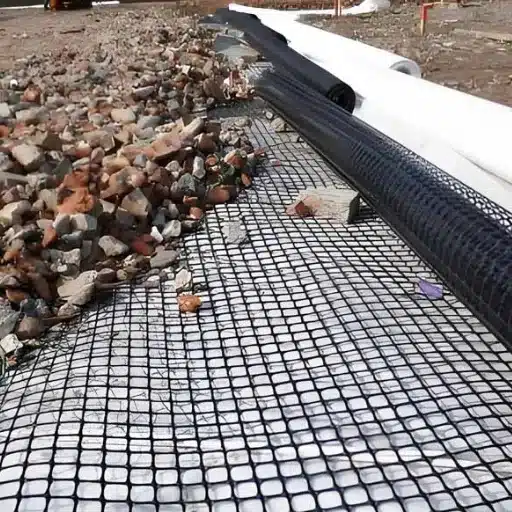
Unit price falls as quantity rises, and the steps are predictable. Single-roll retail is the most expensive lane. Moving to full-container, factory-direct purchases is where ex-works pricing becomes real. Chinese geogrid exporters commonly quote from roughly 1,000 to 3,000 m² minimums, and container-scale orders receive the steepest per-m² pricing.
A useful mental model for a mid-size buyer is the container itself. A 40-foot high-cube container holds roughly 53,000 m² of a light 15-15 biaxial grid but only about 17,800 m² of a 40-40 grade, because the heavier grid is denser and stiffer per roll. High-strength uniaxial and PET grades fit far less, from about 8,000 to 7,000 m² per container. That matters for freight, which we turn to next.
Freight and the Delivered Cost per m²
Freight often moves the delivered geogrid cost per m² more than the ex-works price difference between two suppliers. The reason is container utilization. If ocean freight for a 40-foot container to your port costs a fixed sum, then dividing that sum across 53,000 m² of light grid versus 17,800 m² of heavy grid changes the freight per m² by roughly three times.
A haul-road contractor in West Africa learned this when he compared two bids. The first supplier quoted a slightly lower ex-works price on a 40-40 biaxial grid. The second quoted a higher factory price but loaded 53,000 m² per container instead of 17,800 m² by matching a lighter grade to his actual traffic. Once he added freight per m² to both, the “more expensive” grid was cheaper delivered, and it was the correct product for a mine haul road carrying loaded trucks.
This is why you must compare on the same trade term. EXW is the factory gate price. FOB adds loading and carriage to the port of shipment. CIF adds insurance and freight to your destination port. These are not price differences; they are scope differences. Always ask for the quote on the same basis, or you are comparing apples to delivery trucks. If you are buying at container scale and want FOB or CIF pricing with test reports included, our geogrid product page and engineering team can quote against your grade and destination.
Is a Geogrid Worth the Cost? The Aggregate-Savings Case

The honest answer is that a geogrid pays for itself mainly where it removes aggregate or prevents failure, and those savings are largest on weak ground.
The mechanism is well documented. Base course reduction (BCR) measures how much thinner an aggregate layer can be with a geogrid at equal performance. Full-scale research commonly reports reductions of 20 to 50%, with 20 to 40% typical on soft subgrades, and some pavement studies modeling up to 64%. A University of Illinois project carried heavy truck traffic over soft clay on 10 inches of base instead of 18, and field studies have reported savings on the order of $100,000 to $500,000 per mile on heavy-duty pavement sections. Because aggregate is usually the largest cost item in a road section, cutting it 20 to 40% frequently pays for the grid several times over.
Traffic benefit ratio (TBR) measures life extension. Reinforced sections commonly deliver a TBR of 2.0 to 3.0, meaning the road lasts two to three times longer before rutting, with rutting life in one test jumping from about 20 load cycles unreinforced to about 540 reinforced. An Indian research review found geogrid-reinforced pavements cut aggregate thickness 28 to 45% and reduced embodied carbon by roughly 58 to 85 tonnes of CO2 equivalent per kilometer, which matters for projects with sustainability reporting.
The caveat is equally important. On firm subgrades above roughly CBR 4 to 8, the thickness credit shrinks, and on very strong soil a geogrid may not pay for itself at all. Buyers sometimes treat geogrid as a universal additive. It is not. It is a solution for weak subgrades, heavy loads, and rutting risk, which is exactly why the selection question comes before the price question.
How to Compare Geogrid Quotes From Different Suppliers
Because per-m² prices look so different across suppliers, use a fixed comparison method. A reliable checklist looks like this:
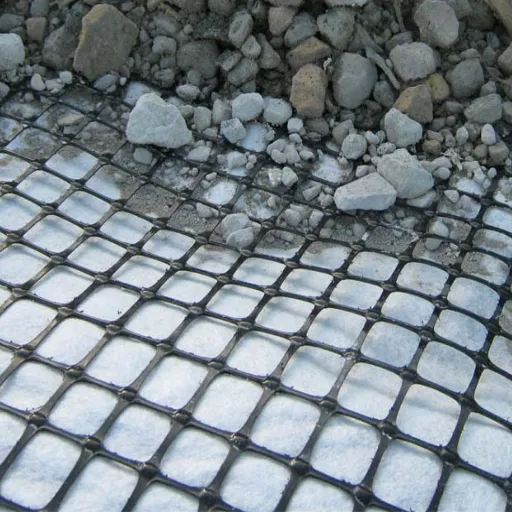
- Match the specification. Same polymer, same strength class, same aperture, and same strength at 2% and 5% strain. Two grids both labeled “30 kN/m” can differ in junction efficiency and stiffness.
- Ask for MARV, not typical values. Minimum average roll value is the number used in design and procurement. “Typical” figures are marketing numbers.
- Compare on the same unit and trade term. Pick m² or sq ft, and EXW, FOB, or CIF, then keep it fixed.
- Check roll width and required overlaps. A narrower roll means more overlaps, which adds material quantity and labor.
- Request third-party test reports and quality certification. A cheap grid with no test data is not cheaper if it fails conformance.
A shortcut for step one: if a supplier will not tell you the grade, the mass per square meter, the carbon black content, or the test standard, walk away. Those are the details that separate a $0.30 grid that works from a $0.30 grid that does not.
Frequently Asked Questions
How much does geogrid cost per square meter?
Standard polypropylene biaxial geogrid runs about $0.15 to $0.90 per m² ex-works, while high-strength uniaxial, polyester, and composite grids range from $0.30 to $4.60+ per m² depending on grade. Delivered and installed costs add freight, aggregate, and labor on top of material.
How much does geogrid cost per square foot?
Material runs roughly $0.02 to $0.45 per sq ft depending on grade, since one square meter equals about 10.76 sq ft. North American retail single-roll prices run higher, often $0.32 to $1.52 per sq ft, because they include distributor markup on small quantities.
Why is geogrid so expensive?
It usually is not, when specified correctly. Costs rise with strength class and polymer because more material goes into every rib. The real expense comes from over-specifying a heavy grid where a light one works, or from buying at retail for a project large enough to justify a container.
Is a geogrid worth the cost?
Yes on weak subgrades and heavy-traffic sites, where it cuts aggregate base 20 to 50% and extends road life two to three times. On firm ground above roughly CBR 4 to 8, the savings shrink and a grid may not pay for itself.
How many square meters of geogrid fit in a container?
It depends on grade. A 40-foot high-cube container holds about 53,000 m² of a light 15-15 biaxial grid but only about 17,800 m² of a 40-40 grade, and far less of high-strength uniaxial or PET grids.
Conclusion
Geogrid cost per square meter is not a single number. It spans roughly $0.15 to $4.60+ per m² for material alone, driven by type, polymer, and strength class, and the delivered, installed figure is typically several times that once freight, aggregate, and labor are included. The practical takeaways are simple: fix the specification before you collect quotes, compare on the same unit and trade term, account for container freight at scale, and judge the grid against the aggregate and maintenance it saves rather than its raw sticker price.
When the number does not make sense on its own, the question is usually specification, not price. That is exactly where an engineering conversation helps. Tell us your soil type, load, and area, and we will recommend the right geogrid grade with test data and a quote you can compare on an even basis. Contact engineering support, and our team will come back to you quickly.