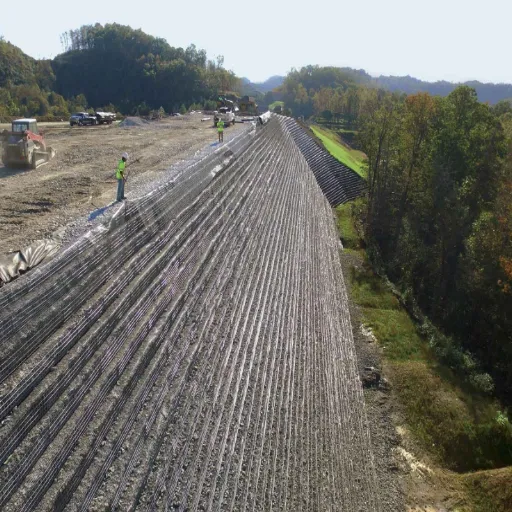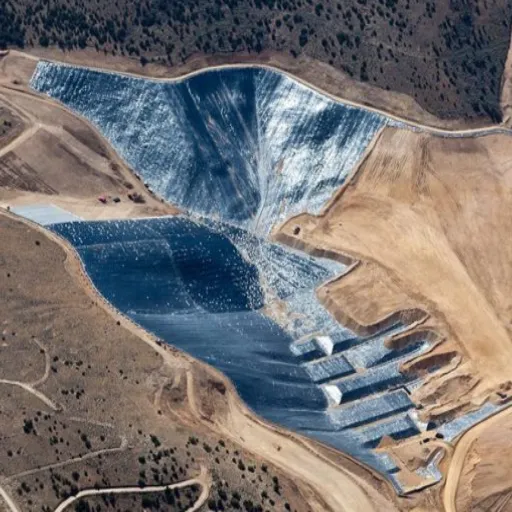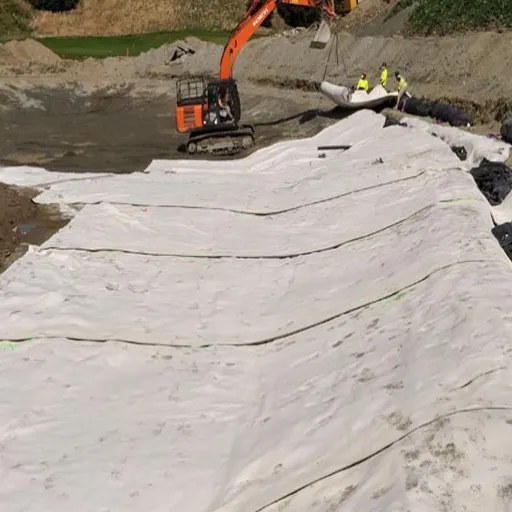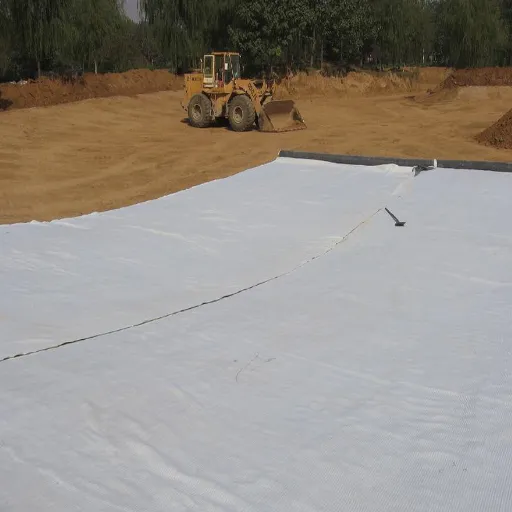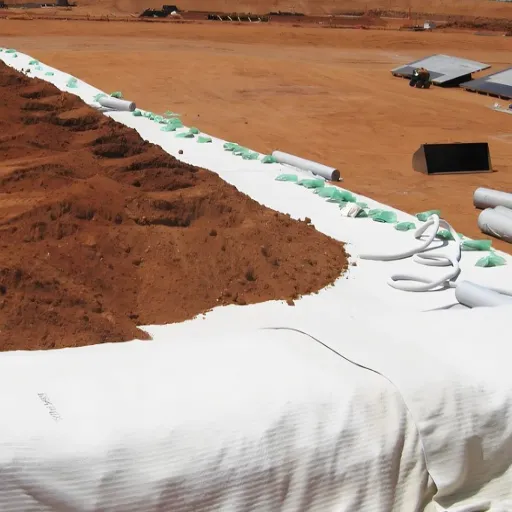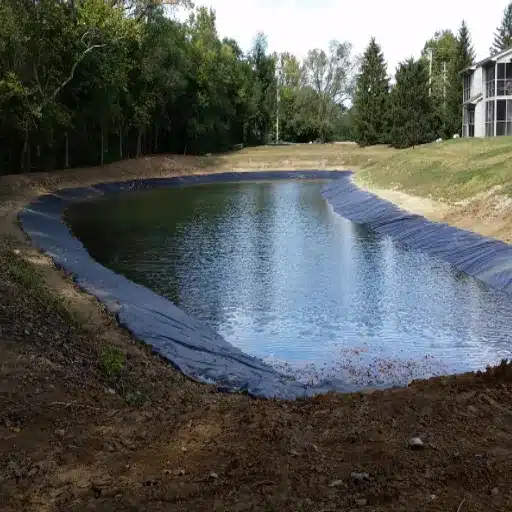
A geogrid for road base is a high-strength polymer grid laid between the subgrade and the aggregate base course that interlocks with the stone, confines it under traffic, and spreads wheel loads over a wider area, which lets a thinner, stiffer base carry the same traffic. On weak subgrades this typically cuts aggregate thickness by 20-50%, extends pavement life 2-3 times, and reduces rutting by 30-60%.
Here is the problem most buyers run into. Road construction accounts for roughly half of all geogrid demand worldwide, yet most advice online is split between thin vendor blog posts and manufacturer pages that push one product. Almost nobody gives you the numbers you need: how much rock you can actually save, how thick the base must still be for your soil, whether biaxial or triaxial is right, and how to install it so it survives the first day of construction traffic.
By the end of this guide you will know how a geogrid reinforces a base course, how to read a CBR-based aggregate thickness chart, how much base course you can realistically save, which geogrid type to specify for roads versus driveways, the step-by-step installation sequence, and how to buy it from a qualified supplier.
Key Takeaways
- A geogrid placed at the base/subgrade interface cuts aggregate base thickness by 20-50% on weak subgrades and cuts rutting by 30-60%.
- Size the base by subgrade CBR: firm soil (CBR 8+) needs only 100-150 mm over the grid, while very soft soil (CBR under 2) needs 300-400 mm plus a separator geotextile.
- Biaxial geogrid is the standard for road bases and driveways; triaxial suits heavy, multidirectional traffic. Uniaxial is for walls and slopes, not road bases.
- The payback math is real: a grid costing a few dollars per square meter can cut a thick capping layer that costs far more to place.
- Install it taut with proper overlaps, never drive on exposed grid, and keep at least 150 mm of compacted cover before trafficking.
What Is a Geogrid for Road Base?
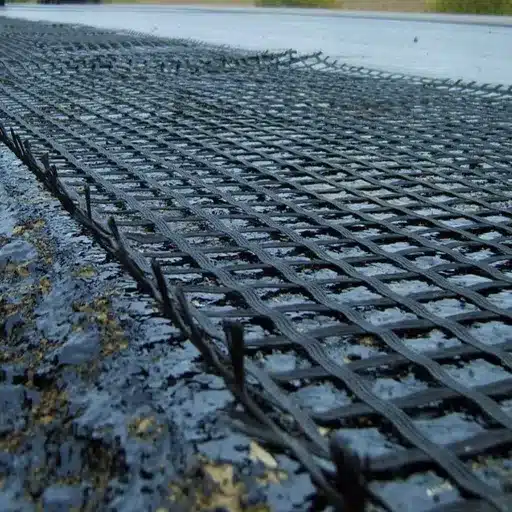
A geogrid for road base is an open-grid polymer reinforcement installed at the interface between the native subgrade and the aggregate base course. It works through three mechanisms that act together.
Lateral restraint and confinement. Aggregate particles drop through the grid apertures and lock against the transverse ribs. Confined stone resists spreading sideways under each wheel pass, so the reinforced layer behaves more like a stiff slab than a loose pile. This is the main reason geogrids cut rutting on roads and driveways.
Increased bearing capacity. On weak subgrades, the grid forces the potential bearing capacity failure surface to develop along alternate, higher-strength paths, which raises the load the soil can carry before it punches through.
Membrane support. At deep ruts on unpaved roads, the grid stretches and carries part of the wheel load like a tensioned membrane. This effect matters mainly on gravel roads and construction platforms where deeper ruts are acceptable before surfacing.
A geogrid reinforces; it does not filter. On soft clays and silts, fines migrate up into the base unless you pair the grid with a separator geotextile. For the complete overview of types, materials, and applications, see our complete geogrid guide.
How Much Base Can a Geogrid Save?
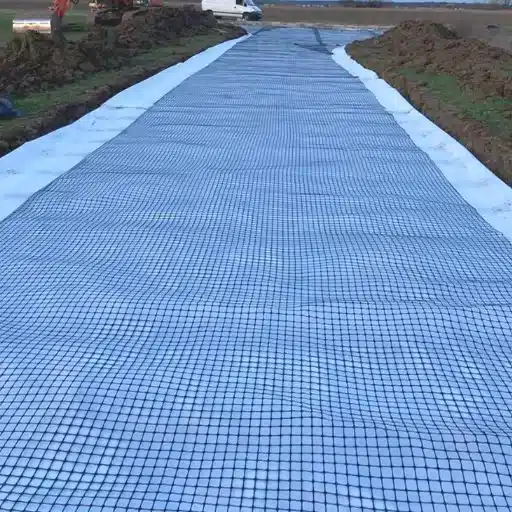
This is the number buyers ask about first, and the answer is well documented.
Base course reduction (BCR) is the standard measure of how much aggregate a geogrid base course removes without losing performance. Full-scale research commonly reports reductions of 20-50%, with 20-40% the most typical range on weak subgrades. A University of Illinois study published in Transportation Geotechnics found geogrid-reinforced sections used 20-40% thinner aggregate layers, gained 50-200% in base-course stiffness, and cut rutting by more than 50%. Because aggregate is the single biggest cost item in a road section, those reductions translated into $100,000-$500,000 saved per mile.
The field results back this up. In the UNLV full-scale pavement study, a 406 mm unreinforced base was reduced by 26% with biaxial geogrid and 45% with triaxial geogrid at equivalent performance; a 305 mm base reduced by 29% and 36% respectively. On I-90 near Chicago, a section over soft clay carried heavy truck traffic on 10 inches of base instead of 18 inches, with zero measurable rutting after 5 million ESALs.
Traffic benefit ratio (TBR) measures life extension. Typical geogrid-reinforced sections deliver a TBR of 2.0-3.0, meaning the same road lasts two to three times longer, and modeling has shown ratios up to 8.9 in some pavement frameworks.
Here is the honest caveat. The savings are greatest on soft ground. On firm subgrades above roughly CBR 4-8, the thickness credit shrinks, and on very strong soil a geogrid may not pay for itself. The US Army Corps of Engineers guidance (ETL 1110-1-189) is explicit: thickness reduction credit applies mainly below about CBR 4, and above that you design the base normally.
Aggregate Thickness Charts by Subgrade CBR
CBR (California Bearing Ratio) is the standard measure of subgrade strength. You get it from a lab test or a cone penetrometer. The higher the number, the stronger the soil. The chart below gives the compacted aggregate thickness you need over a geogrid for typical residential and light-commercial loads.
| Subgrade CBR | Passenger cars | Light trucks / SUVs | Without geogrid (comparison) |
|---|---|---|---|
| Firm (8+) | 100-150 mm | 150-200 mm | 150-200 mm |
| Medium (4-8) | 150-200 mm | 200-250 mm | 200-250 mm |
| Soft (2-4) | 200-250 mm + separator | 250-300 mm | 250-300 mm |
| Very soft (under 2) | 300-400 mm, two layers | 350-450 mm | 350-450 mm |
Three rules apply to every row.
Never go below about 100-150 mm of compacted cover. Below that, aggregate interlock drops and the grid can telegraph to the surface. The first lift should be 150-200 mm, placed without driving on the bare grid.
Add a separator below CBR 4. On silts and clays, place a nonwoven geotextile between the subgrade and the geogrid so fines cannot pump into the base. Our geotextile fabric guide compares woven and nonwoven options and how to specify a separator. On CBR below about 1, some designs use two geogrid layers or a staged fill.
Add 50-100 mm in cold climates. Frost heave is a separate failure mode, and a geogrid does not stop it. Verify drainage and add extra depth in freeze-thaw zones.
If you are designing a working platform, haul road, or railway section on very low CBR, the geogrid for soft ground and subgrade stabilization guide covers those heavy-load cases in detail.
Biaxial vs Triaxial Geogrid for Road Base
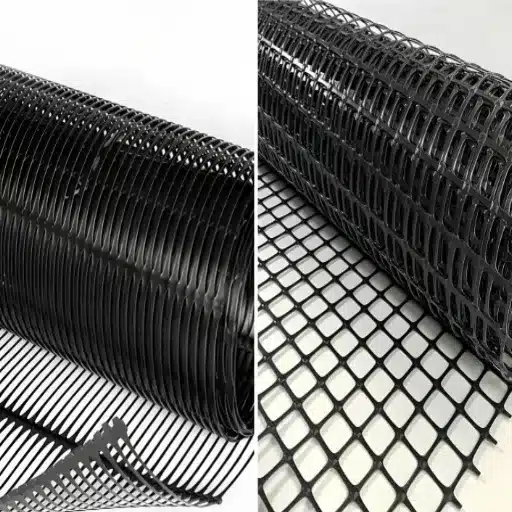
For a road base, the practical choice is between biaxial and triaxial geogrid.
Biaxial geogrid carries roughly equal strength in two directions and is the standard for road bases, driveways, parking lots, and large-area subgrade stabilization. The rectangular apertures interlock with angular crushed stone, and the two-way ribs confine the aggregate under wheel loads arriving from any direction.
Triaxial geogrid uses a triangular aperture structure that spreads load in all directions with more uniform stiffness. It performs best under heavy, multidirectional traffic such as highways, haul roads, and container yards.
A triaxial grid is not automatically better. For most driveways and light road bases, a light or standard biaxial grade is the economical choice. Choose triaxial when the loads are heavy, the traffic is frequent, or the section is a permanent paved road carrying high ESAL counts.
Uniaxial geogrid, with strength in one direction, belongs in retaining walls and steep slopes, not road bases. The uniaxial geogrid for retaining and MSE walls guide covers where it fits.
A practical grade guide: light 15-15 to 20-20 kN/m biaxial for driveways and light access roads, 30-30 as the common highway and yard grade, and 40-40 to 50-50 under heavy axles and container handling.
Geogrid for Gravel Driveways: Does It Work?

Yes, and a geogrid for driveway construction is one of the most cost-effective uses of the product. On a gravel driveway, the grid confines the stone so it stops punching into clay, reduces washouts, and cuts the number of gravel top-ups over the years. The Concrete Masonry and Hardscapes Association endorses geogrids specifically for soft, wet, slow-draining soils.
The numbers are striking for a homeowner. A driveway that would traditionally need a thick base can often be built with about half the stone. One documented example on soft clay used a biaxial geogrid to hold a 12-inch section that replaced a conventional 36-inch base. Over a typical residential driveway, the grid material costs a small fraction of the aggregate it replaces, and it keeps the surface drivable through wet seasons.
Take the case of Marcus, who put a biaxial geogrid under a 120-meter gravel drive in March. His neighbor had re-graded and re-topped the same length of drive twice in four years on soft clay, paying for stone and delivery each time. Marcus laid the grid taut, used 200 mm of angular crushed stone over it, and added edge restraint. Two wet seasons later the surface is still firm, while the neighbor’s drive ruts again every spring.
For light vehicles on firm ground, plan on 100-150 mm of compacted aggregate over the grid; on soft clay, 200-250 mm plus a separator. Use angular, well-graded crushed stone. Rounded pea gravel does not interlock and defeats the whole system.
Paved vs Unpaved Roads: The Design Difference
The design logic differs between gravel and asphalt roads, and the distinction matters for specifying the section.
Unpaved roads and driveways. The geogrid carries load through confinement and, at deep ruts, a tensioned membrane effect. The standard analytical method is the Giroud-Han design procedure for geogrid-reinforced unpaved roads, which sizes the base from the wheel load, number of passes, and allowable rut depth. The method’s bearing capacity factor jumps from 3.14 for an unreinforced section to 5.71 with a geogrid, which is the analytical reason a reinforced base can be thinner. A common design target is a 2-inch rut after 1,000 passes of an 18-kip axle.
Paved roads. Under asphalt, the geogrid acts as base-course reinforcement. It raises the effective stiffness of the aggregate layer, reduces rutting and differential settlement, and earns a base-course-reduction credit in design. One caution applies: achieving density over a grid on a very soft subgrade can be difficult, and a pump-prone soil may need an extra grid or separator layer beneath.
The Giroud and Han 2004 method is the authoritative reference if you want the full analytical treatment. For the field-side behavior of reinforced sections, the MnDOT research program on granular equivalent factors for geogrids is a strong, recent source. Note that a base-course grid is a different product from an asphalt interlayer grid, which intercepts reflective cracking and needs glass-fiber construction. Do not substitute one for the other.
How to Install a Geogrid Road Base: Step-by-Step
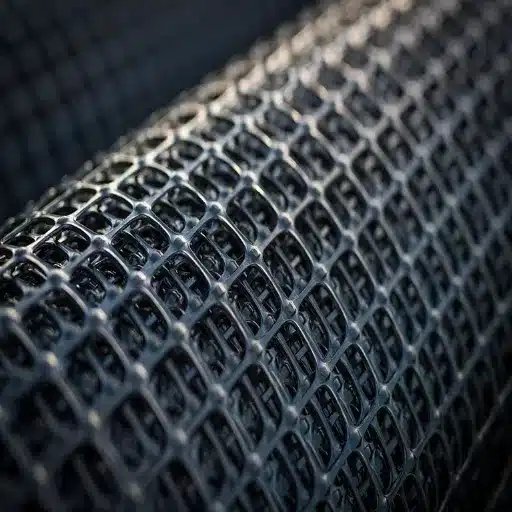
Installation mistakes account for most premature failures, and the protocol is straightforward if you follow it.
- Prepare the subgrade. Strip topsoil and organics, proof-roll, and undercut soft spots, replacing them with compacted granular fill. The grid cannot fix an unaddressed soft area.
- Add a separator if needed. On silts and clays below about CBR 4, lay a nonwoven geotextile flat with roughly 300 mm overlaps and pin it lightly.
- Place a first lift. Spread 100-150 mm of crushed stone and lightly compact it so the grid lies flat and supported. Do not drive on bare grid.
- Roll out and tension the geogrid. Roll biaxial grid perpendicular to the traffic direction so wheel loads engage both directions. Pull it taut to remove wrinkles, and pin or stake the edges every 1-2 m.
- Overlap and stagger seams. Use 300 mm overlap on firm ground and up to 900 mm on soft ground below CBR 1. Stagger panel ends so no two seams align.
- Back-dump the aggregate. Work from the far end toward the overlaps so you never drag stone across exposed grid. Keep at least 150 mm of cover before any equipment traffic.
- Compact in thin lifts. Build 150-200 mm lifts to about 95% Standard Proctor, moisture-conditioning as you go.
- Finish and restrain the edges. Top with a surface course and install edge restraint on driveways so the section stays locked laterally.
Two QC rules matter. Use angular, well-graded crushed stone (about 3/4-inch minus, low fines). And cover the grid within the manufacturer’s UV-exposure window, typically 7-15 days. The full geogrid installation guide covers every step, equipment rules, and the seven most common mistakes in more detail.
Geogrid for Road Base Cost: What to Budget
Material price is the wrong number to compare in isolation. Here is what matters.
Standard polypropylene biaxial geogrid material typically runs $0.50-$7.00 per square meter, with the common light-to-standard grades for driveways and road bases at the lower end. US retail rolls commonly work out to roughly $0.28-$0.55 per square foot, and factory-direct supply from China can be substantially lower before freight. Price scales nearly proportionally with strength grade (15-15 vs 30-30 kN/m), polymer, and roll width, so always get quotes by specification rather than the word “geogrid.”
Total installed cost is the real metric. A grid that costs a few dollars per square meter can eliminate or reduce a thick capping layer that costs far more to excavate, import, and place. That is why the proof-roll math is so persuasive. On a soft subgrade, one widely used proof-roll chart shows a biaxial geogrid cutting required aggregate from 36 inches to 24 inches at CBR 1, and from 24 inches to 16 inches at CBR 2, versus over-excavation alone. The aggregate saved is worth multiples of the grid.
The geogrid cost per square meter guide breaks down pricing by type, grade, and region with full installed-cost modeling.
How to Buy Geogrid for a Road Base

Specify the section, not just the product. A good road-base RFQ identifies the intended function (reinforcement, stabilization, or both), the subgrade CBR, the design traffic, the aggregate gradation, the layer thickness, and the required test documents.
Verify quality against these checks:
- Tensile strength reports: Ask for ASTM D6637 test data, and compare long-term design strength (LTDS) rather than ultimate tensile strength. LTDS typically runs 33-50% of UTS after creep and installation-damage factors.
- Junction efficiency: 90% or higher. This is how well the ribs hold together at the joints, and it drives field performance.
- Aperture match: The aperture should suit your aggregate, roughly D50 equal to half the aperture size, so the stone interlocks instead of sitting on top.
- UV and carbon black: At least 2% carbon black for outdoor exposure life, and verify the cover window.
- Quality system: ISO 9001 manufacturing and documented QC with retained test samples.
For a full step-by-step selection framework that walks from project requirements to spec, see how to choose a geogrid. When you are ready to source, we supply geogrid for road bases and earthworks plus woven geotextile separation layers, with engineering consultation and flexible order quantities for projects of any size.
Ready to compare a reinforced section for your site? Send us your soil report and traffic assumptions for a technical quote. Request a technical quote.
Frequently Asked Questions
How much aggregate do you need over a geogrid?
On firm ground (CBR 8+), 100-150 mm for cars and 150-200 mm for light trucks. On medium soil (CBR 4-8), 150-200 mm and 200-250 mm. On soft clay (CBR 2-4), 200-250 mm plus a separator geotextile. Never go below about 100-150 mm of compacted cover.
How much aggregate can a geogrid save?
Typically 20-50% on weak subgrades, with 20-40% the most common range. Full-scale studies show a 406 mm base reduced by 26% with biaxial geogrid and 45% with triaxial. On firm ground, the savings shrink and may not justify the cost.
Do you need a geotextile under geogrid on a driveway?
On silts and clays below about CBR 4, yes. The geogrid reinforces but does not filter, so a nonwoven separator stops fines from pumping up into the base. On clean, coarse subgrades, a geogrid alone is enough.
Is a geogrid worth it for a gravel driveway?
Usually yes on soft or wet soil. It confines the stone, reduces washouts, and cuts gravel top-ups, and the aggregate saved often pays for the grid. On already-firm ground, the benefit is modest.
Biaxial or triaxial geogrid for a road base?
Biaxial is the standard for most road bases, driveways, and parking lots. Triaxial suits heavy, multidirectional traffic such as highways and haul roads. For light applications, a standard biaxial grade is the economical choice.
Can geogrid fix a muddy driveway?
Not on its own. A geogrid reinforces a base that drains; it does not create drainage. Fix the water problem first with grading, drainage, or a suitable aggregate, then the grid keeps the stone in place.
Conclusion
A geogrid for road base is one of the best-documented ways to cut aggregate cost and extend road life, and the evidence is consistent: 20-50% thinner bases on weak subgrades, 30-60% less rutting, and 2-3 times longer service life. The payoff is largest on soft ground, which is exactly where most roads and driveways get into trouble.
Before you order, size the base to your subgrade CBR, choose biaxial for standard roads and driveways (triaxial for heavy traffic), pair the grid with a separator geotextile on clays, and install it taut with proper cover. Buy by specification and verified test reports, not by price alone.
If you would like a section designed for your soil and traffic, or a tailored quotation for geogrid and companion geotextiles, our engineering team is ready to help. Contact engineering support and we will get back to you quickly with a straight answer.
For the full family of geogrid types, applications, and selection, start with our complete geogrid guide.