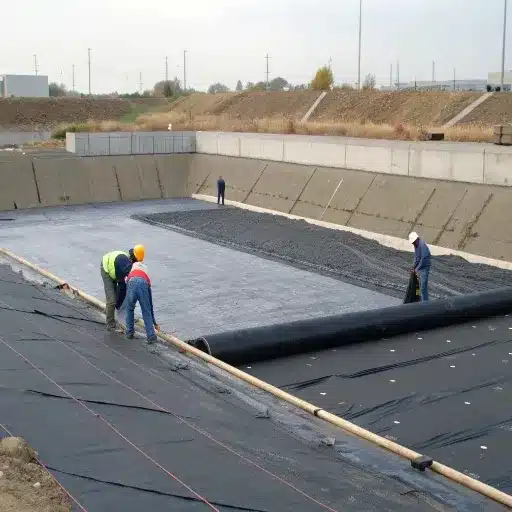
A GCL (geosynthetic clay liner) costs roughly $0.35 to $2.00 per square meter as ex-factory material in 2026, depending on bentonite loading and order volume. Once subgrade preparation, overlaps, and labour are added, installed cost typically runs $4 to $12 per square meter. Heavy, reinforced, or film-laminated grades sit at the top of that range; standard needle-punched grades at 4,000 g/m² sit near the bottom.
That is the short answer. The useful answer is why the number moves, and an honest GCL cost per square meter depends on three things: how many grams of bentonite the liner carries, how it is bonded, and how much you order at once. Understanding geosynthetic clay liner cost this way turns a vague range into a budget you can defend.
Key Takeaways
- GCL material pricing is set primarily by bentonite loading (grams per square meter), not by the roll price alone.
- Standard needle-punched GCL material runs roughly $0.35 to $2.00 per m² ex-factory; reinforced or HDPE-laminated grades reach ~$3.25 per m².
- Installed cost is $4 to $12 per m², and installation adds 30 to 50% on top of material.
- Bulk orders above 10,000 m² commonly earn 10 to 25% volume discounts.
- A cheap GCL quote is usually a thinned spec: it removes grams, swell index, or peel strength. Verify three numbers before you pay.
Let me be clear about what this guide is. It isn’t a price list, because a real GCL quote depends on your project chemistry, slope, and volume. It’s a framework that tells you where a fair per-square-meter price should land, and what to check so a low number doesn’t become an expensive liner.
If you want a specific number for your site, you can request a technical quote and we will price your actual specification rather than a generic average.
What Drives GCL Cost Per Square Meter
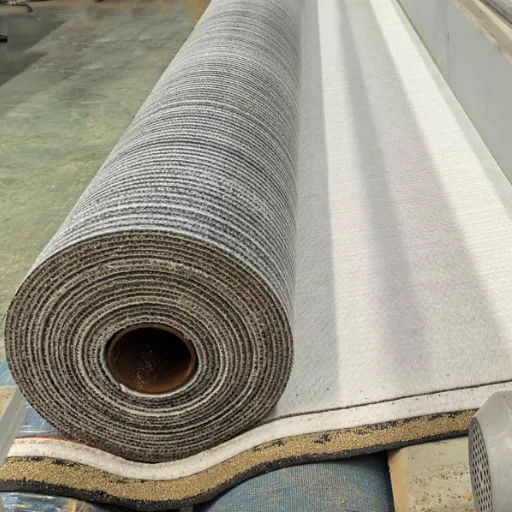
Three variables set roughly 80% of the price of any geosynthetic clay liner. Each one is a specification decision, and each one has a visible effect on the invoice.
Bentonite Loading (Grams Per Square Meter) Is the Primary Driver
Bentonite is the waterproofing component. The carrier geotextiles only hold it in place. When you specify 5,000 g/m² instead of 3,000 g/m², you are buying 67% more clay, and you pay for it.
This single number explains most of the spread in GCL cost per square meter. A project that genuinely needs 6,000 g/m² for aggressive leachate will never match the price of a decorative pond liner at 3,000 g/m². They are different products that share a name. Because clay is the barrier, bentonite clay liner cost tracks loading almost linearly.
Bentonite loading also drives freight, because GCL is the one geosynthetic where the container weighs out before it cubes out. A 6 m × 30 m roll weighs 540 kg at 3,000 g/m² and 1,080 kg at 6,000 g/m². Either way, a 40-foot container hits its weight limit long before it runs out of space.
GCL Construction Type Changes the Cost
The bentonite has to be held between two geotextiles somehow, and the method affects both price and performance.
- Needle-punched (GCL-NP) is the most economical. Fibres are punched through the bentonite to lock the layers together. It handles slopes and gives good internal shear strength.
- Film-laminated (GCL-OF) bonds a polymeric film to the bentonite for a lower, more predictable flux. It costs more but is the right choice where the design demands a factory-made two-in-one barrier.
- Adhesive-bonded (GCL-AH) is produced to order and typically carries the highest unit cost.
Carrier Geotextile and Raw-Material Inputs
The carrier fabrics are made from polypropylene or polyester, which are oil-linked. Materials account for more than 60% of GCL cost, so when polymer prices move, liner prices follow within a quarter or two. Demand is steady rather than volatile: the global GCL market is valued at roughly USD 500 million and is forecast to grow near 5.5% a year to 2030, according to Mordor Intelligence.
Want to see how these variables translate into a specific product? Explore our needle-punched GCL range and compare the loading options directly.
GCL Price Per Square Meter by Bentonite Loading and Grade
The table below shows indicative ex-factory material pricing in 2026. Treat these as bands for budgeting, not quotes. Confirm current figures against your specification and volume before you commit.
| Bentonite loading | Typical duty | Indicative material cost (per m²) |
|---|---|---|
| 3,000 g/m² | Decorative ponds, canals, canals with clean water | ~$0.35 to $0.70 |
| 4,000 g/m² | Reservoirs, secondary containment | ~$0.45 to $0.90 |
| 4,500 g/m² | Landfill base and caps (common spec) | ~$0.55 to $1.20 |
| 5,000 g/m² | Landfill, tailings, tougher chemistry | ~$0.70 to $1.60 |
| 6,000 g/m² | Heavy-duty containment | ~$0.90 to $2.00 |
Reinforced and HDPE-laminated composite GCLs sit above this table, reaching roughly $3.25 per m² at the top of the market. The quickest way to sanity-check any GCL price per m2 is to divide it by the bentonite loading; a figure far below these bands usually means fewer grams, not a better deal.
A note on units, because it matters more than people expect. One square meter equals about 10.76 square feet. When a supplier quotes a GCL cost per square foot, an engineer budgeting in meters can misread the total by an order of magnitude. Always confirm which unit the number is in before comparing two quotes.
For context on how these prices compare with a traditional liner, our GCL vs compacted clay liner comparison works through conductivity, installation speed, and installed cost side by side.
GCL Material Cost vs Installed Cost Per Square Meter
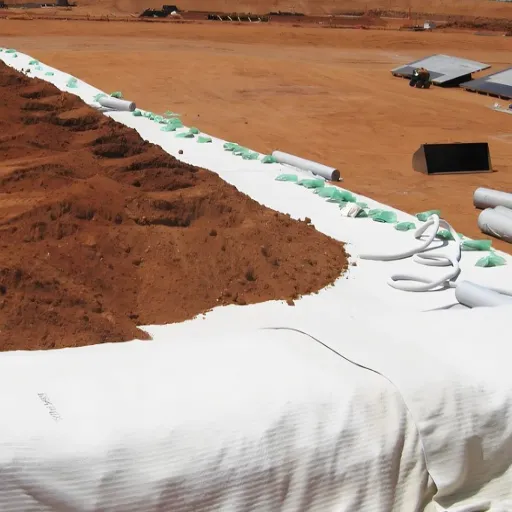
The biggest mistake in GCL budgeting is treating the roll price as the project cost. Material is one line. Installation is the rest.
Consider a procurement officer, Elena, pricing a 12,000 m² reservoir liner in early 2026. Her first supplier quoted $0.65 per m² and she built her budget around it.
The actual installed figure came in near $7 per m². That’s once subgrade preparation, a 300 mm overlap allowance, anchor trenches, and the installation crew were counted. Her “cheap” liner wasn’t cheap. It was simply incomplete.
What “Installed” Adds
- Subgrade preparation: the surface must be free of debris over 20 mm and compacted and sloped correctly. This is site work, and it costs what site work costs.
- Overlaps and waste: allow 150 mm minimum on flat ground and 300 mm on slopes over 10%. Overlap is material you pay for and place but never count as coverage.
- Anchoring: anchor trenches at the perimeter and on slopes.
- Labour and equipment: placing crew, hydration control, and cover placement.
Why GCL Installation Runs 30 to 50% Cheaper Than Welded HDPE
Here’s the real cost advantage of a GCL. Needle-punched GCL panels overlap and self-seal through bentonite migration. There’s no heat welding, no seam testing regime, and no trained welder shortage to schedule around. Welded geomembrane systems need all three.
That’s why installation typically represents 30 to 50% of a GCL-based system’s cost, versus a larger share for a welded HDPE liner. The savings aren’t in the roll. They’re in the field.
How Order Volume Affects GCL Price Per Square Meter
GCL pricing is volume-sensitive in a way that surprises first-time buyers. Competition among suppliers is strong, and the fastest lever they have is quantity.
| Order volume | Typical effect on unit price |
|---|---|
| Under 1,000 m² | Highest unit cost; expect near list price |
| 1,000 to 5,000 m² | Standard bulk tier; modest discount |
| 5,000 to 10,000 m² | Clear discount versus small orders |
| Above 10,000 m² | Typically 10 to 25% below small-order pricing |
There’s a ceiling to this, and it isn’t where buyers expect it. Because GCL is freight-heavy, the discount on a very large order can be partly absorbed by shipping if the supplier is far from your site.
A 40-foot container holds only about 5,000 to 9,000 m² of GCL depending on loading, compared with roughly 29,000 m² of 1 mm geomembrane. That’s a logistics fact, not a pricing trick, and it shapes the delivered cost per square meter more than most buyers anticipate.
If your project is large enough that freight is material to the decision, talk with our engineering team about delivered cost rather than ex-factory cost.
GCL Cost vs HDPE Geomembrane and Compacted Clay Liner
GCL is rarely chosen in isolation. It competes with a welded HDPE geomembrane and with a compacted clay liner, and in many landfill designs it is used alongside a geomembrane rather than instead of one.
| Liner option | Relative material cost | Installation | Where it wins |
|---|---|---|---|
| GCL (needle-punched) | Lower | Overlaps, self-seals, no welding | Slopes, low-flux barriers, composite systems |
| HDPE geomembrane | Higher per m² | Requires welding and seam QA | Long-life chemical barriers, primary liners |
| Compacted clay liner | Variable, site-dependent | Heavy earthworks | Sites with plentiful suitable clay |
The material-versus-design distinction matters here, and our geomembrane vs GCL comparison draws it carefully. A composite laminated GCL is a single product with film bonded to bentonite. A composite liner system is a design configuration: a separate geomembrane laid over a separate GCL.
When a project needs both long-term chemical durability and a self-healing, low-permeability seal, the answer is often a composite liner system rather than either material alone. For landfill cells, that stacked approach is standard, and our guide to the GCL landfill liner explains how the layers are sequenced.
How to Compare GCL Quotes Without Getting a Thinned Spec
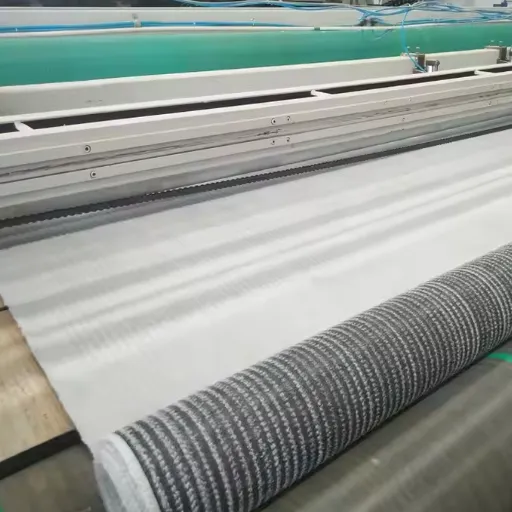
Now the part that saves more money than any negotiation. The single biggest budget risk in GCL procurement is not a high price. It is a low price attached to a quietly thinned specification.
A purchasing manager named Tom learned this the hard way in 2025. He awarded a 4,500 g/m² landfill cap contract to the lowest bidder and saved 14% on material. The delivered rolls measured closer to 3,900 g/m², and the swell index sat just under the specified minimum.
The liner passed visual inspection and failed the design intent. Re-testing, a rejected batch, and a schedule slip erased the saving twice over.
The Three Numbers to Verify
Every GCL spec reduces to three measurable values. Ask for certified test data on your production batch, not a generic datasheet.
- Bentonite mass: the grams per square meter actually present. A cheap quote often removes grams here first.
- Swell index: typically a minimum of 24 mL/2g for sodium bentonite. This is the clay’s ability to seal.
- Peel strength: how strongly the layers are bonded. Low peel strength means the liner can delaminate under stress.
Testing follows recognised methods: bentonite quality to ASTM D5890, and GCL index values against the Geosynthetic Institute’s GRI-GCL3 standard. Ask any supplier to name the method and show the batch result.
For a full walk-through of matching a grade to your site’s chemistry, slope, and confining stress, see our guide on how to choose a GCL. It frames selection as a sequence of decisions, because chemical exposure and cover depth constrain everything that follows.
Conclusion
GCL cost per square meter isn’t a single number. It’s an outcome of three decisions: how many grams of bentonite you specify, how the liner is constructed, and how much you order.
To hold your budget, keep these points in view:
- Standard needle-punched material runs roughly $0.35 to $2.00 per m² ex-factory; installed cost is $4 to $12 per m².
- Volume above 10,000 m² typically earns 10 to 25% off, but freight can absorb part of it.
- GCL’s real saving is in installation, where it avoids welding and can cut field cost 30 to 50%.
- Always compare quotes on equal specification: grams, swell index, and peel strength.
- Remember the units: 1 m² ≈ 10.76 ft², and mixed units hide bad comparisons.
The cheapest liner is the one that performs for its design life. The right GCL cost per square meter is the one attached to a specification that matches your project.
Ready to price your actual specification? Request a technical quote or download our GCL product datasheet and our engineers will map the right grade, loading, and volume tier to your site.